Black & White Facilities / Service brief
Flues and Chimneys
A damaged flue, poor discharge, a change to the combustion equipment it serves or doubt about an existing chimney route are the usual reasons a managed site needs this work. Have the appliance details, the flue route or drawings, earlier reports, the symptoms observed and any roof or high-level access requirement ready when you get in touch.
Overview
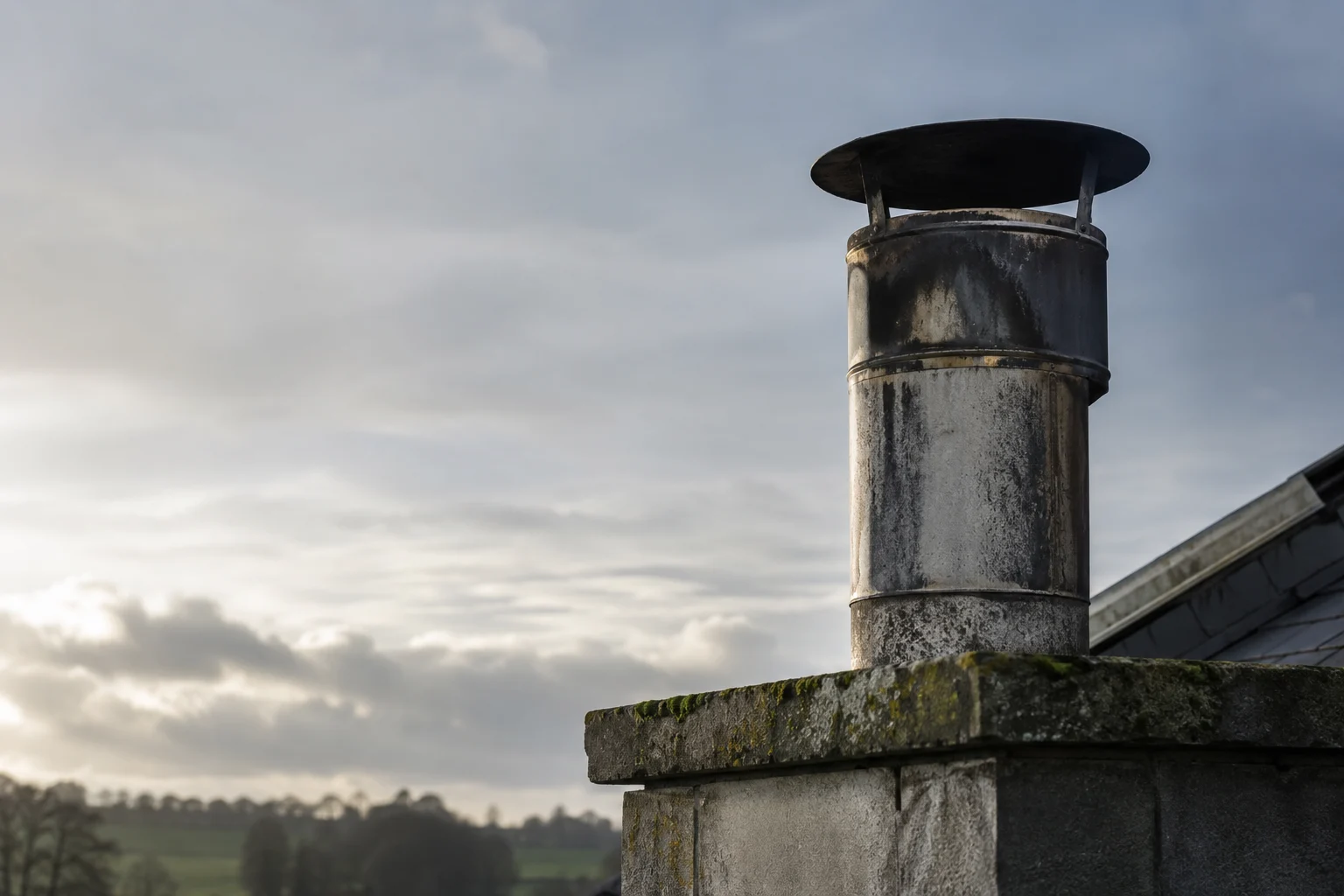
Flue performance is governed by the appliance, the route, the joints, the termination, the combustion air and the building fabric it passes through, so a look at the accessible sections settles some questions and leaves others open until further work is done.
Our full service catalogue, including every individual service, is available across every listed sector and location. For one site or several, we agree the scope, access and programme around the buildings concerned.

What the work can include
The instruction can cover assessment of the visible and accessible flue, a review of the appliance interface, a scope for repair or alteration and the completion information appropriate to the work. The written scope identifies the flue route, accessible findings and appliance interface and states what is provided or tested at the end; repairs beyond that, specialist design, further testing or replacement are separate unless named.
At the close of the work the client is given the flue route as found, the accessible findings and the appliance interface, with the limits of the assessment and the next step recorded.
Important decisions
No general guide is linked, because whether a flue is suitable and how it performs depends on the appliance fitted and the route it follows; any decision on repair or alteration is taken against that installation, within the site’s operating constraints and approval route.
Before we visit
Scoping needs the appliance details, flue route and drawings, earlier reports, access points, the symptoms that prompted the enquiry, roof or high-level access and any planned equipment change. On an estate, give each building its own reference and keep asset and area labels consistent so findings are not merged across installations.
Flag any high-level or roof access that will be needed, as that usually decides how the visit is resourced.
How the work proceeds
Establish the appliance and route, define what can be assessed from accessible positions, arrange any specialist access, report the findings and scope the repair or alteration that follows. The record of route, accessible findings and appliance interface is what the client uses to decide the follow-up on appliance or flue.
What affects cost and timing
Price and duration turn on height and access, whether the appliance must be isolated, how much of the flue is inspected, scaffold or access equipment, roof interfaces, materials and any testing the work calls for. Managed sites should give the operating window, site access contact and shutdown constraints before the visit is planned.
Sector and property applications
Offices, education buildings, retail premises and industrial sites each present flue and chimney work differently; the common threads are high-level access, appliance compatibility and roof-level interfaces. The sector directory puts each site type’s requirement in context.
Local coverage
We work across Northumberland, Tyne and Wear, County Durham and Tees Valley, which includes Berwick-upon-Tweed, Alnwick, Morpeth, Hexham, Newcastle upon Tyne, Gateshead, Sunderland, Durham, Darlington, Hartlepool, Stockton-on-Tees, Middlesbrough and Redcar and Cleveland. On an estate, hold the flue route, accessible findings and appliance interface for each building separately. All locations.
Frequently asked questions
Can an existing flue serve a replacement boiler?
Only after the replacement appliance, flue type, route, condition, termination, combustion air and manufacturer requirements have all been checked; a physical connection proves nothing about compatibility. For estate planning, keep the route, findings and appliance interface on record per building so each next decision is informed.
Does a visible flue defect mean the appliance must be shut down at once?
It may mean the appliance is restricted or isolated, but the right response depends on the defect’s position, condition, the combustion risk and a competent assessment; it is not safe to assume continued use. Where a restriction affects occupants or operations, agree access, shutdown and the hand-off to any retained contractor before scheduling.
Is the chimney covered by a boiler service?
Not as a matter of course. A boiler service and a flue or chimney assessment are separate instructions unless the service scope expressly includes the relevant accessible checks; whatever was instructed, the completion information should say what was covered, what was not and what follow-up remains.
What information is needed to assess a flue?
The appliance details, flue route and drawings, earlier reports, symptoms, access points, roof or high-level access and any planned appliance change. For planned work, the assessment finding is then used to decide whether more flue or chimney work, or related remedial work, needs programming.
Knowledge and guidance
No topic guide is attached because flue compatibility and performance are specific to the appliance and route. The service assessment describes what must be in hand before the work is agreed; apply it with the site’s operating duty, access and approval route in mind.
Related content and enquiry
For flue and chimney work, see Heating and Gas, Commercial Boiler Servicing, Commercial Heating Maintenance and Planned Replacement Programmes, plus all services, maintenance, projects, sectors and locations.
Get in touch with Black & White Facilities with the site or estate, the flue route, any accessible findings and appliance interface, the records you hold and the operating constraints; we then define the client interface and work scope with no response time or outcome presumed.
Discuss the scope
Tell us what needs attention.
Share the site, the issue and any access requirements so we can discuss the next step.