Black & White Facilities / Service area
Smart Buildings and Facilities Technology
Facilities technology should give the people running a building reliable information they can act on. When records become disconnected or requirements change, define the operational problem first, then decide whether sensors, software or reporting will help and who will take responsibility for the next action.
Overview
For smart buildings and facilities technology, set out the result the facilities team needs, alongside the issue that prompted the instruction. Identify the affected location and people, and explain any changed use of the space so the review reflects present operations.
Our full service catalogue, including every individual service, is available across every listed sector and location. For one site or several, we agree the scope, access and programme around the buildings concerned.

What the service can include
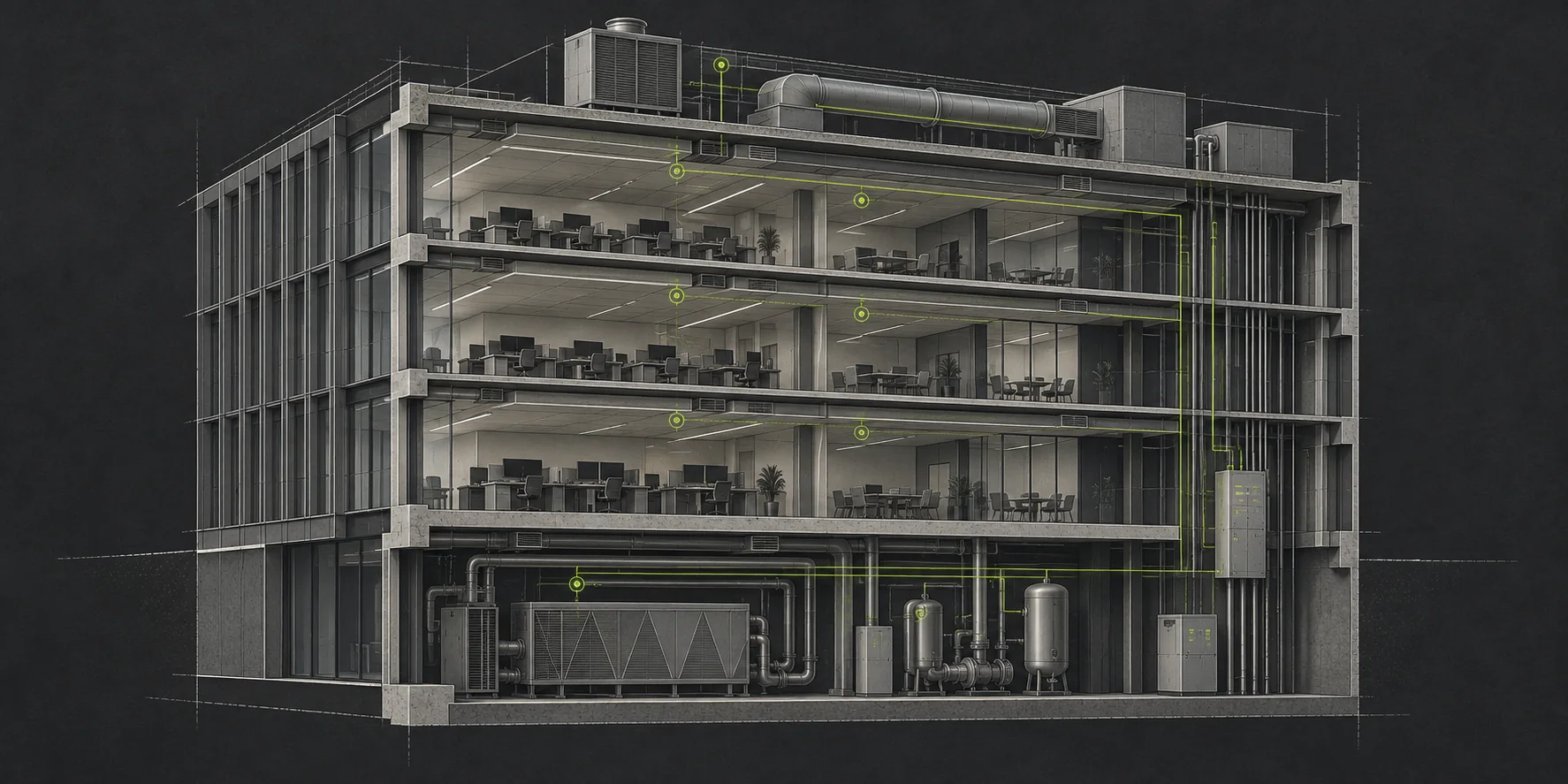
Work can cover digital asset records and logbooks, facilities applications, reporting dashboards, analytics and BMS. Monitoring, metering, occupancy data, digital twins and integration also sit within this service. Agree a single improvement or a wider programme, specifying the operational limits and how data will be handled.
What to consider
Be explicit about whether the requirement is observation, forecasting or equipment control, and the evidence needed for that function. Build privacy, security, permissions and recovery into the specification. Maintenance activities and specialist reviews still need their own responsible people and defined arrangements.
Our proposal separates the activities included in the instruction from responsibilities retained by the building team. Any associated repairs or specialist work have an explicit scope, giving those involved a clear basis for arranging their tasks and understanding the records due at handover.
Before we visit
Share the existing technology, asset information and ownership of data, together with the decisions the site team needs to make. Name contacts for facilities, IT and privacy. Establish where the work stops and what practical response should follow the information produced.
How we help
We review the operational purpose, existing information and installed systems to establish the scope. Delivery follows the permissions and completion criteria agreed with the client. The handover identifies configuration, ownership, support arrangements and limitations for the team taking over the result.
Across an estate, reporting and escalation follow an agreed common approach without losing each site’s contacts or operating conditions. Records link actions to the relevant building or service area, and identify who handles decisions with an effect beyond that location.
What affects cost and timing
Budget for devices, licensing, support, interfaces and the condition of the data. A limited deployment or pilot can help establish value before an estate-wide commitment. Administration and maintenance continue beyond installation and should form part of the cost assessment.
Set out opening hours, sensitive periods and operations that need to continue during delivery. Those requirements inform the programme and quotation, including phased work, special access provisions and the information the site management team needs to receive.
Sector applications
Site activity shapes delivery across all sectors. In education, access needs to fit around teaching; hospitality requires consideration of food operations and guest spaces. For retail, include deliveries and trading periods, while offices require coordination around visitors and staff. Our service and project arrangements reflect those operational differences.
Local coverage
Our coverage extends across Tees Valley, County Durham, Tyne and Wear and Northumberland. Locations include Middlesbrough, Stockton-on-Tees, Hartlepool, Darlington, Durham, Sunderland, Gateshead, Newcastle, Hexham, Morpeth, Alnwick and Berwick-upon-Tweed. The location directory sets out the areas covered.
List a site contact and the working restrictions against every address in an estate instruction. Record individual building differences even where the overall service requirements are shared.
Frequently asked questions
Does more technology always improve facilities management?
No. Identify the decision first, then establish the smallest set of dependable information that will help the team make it.
Can monitoring replace site maintenance?
No. Alerts and observations support the team; maintenance work and arrangements for responding still need to be defined separately.
Can existing systems be retained?
Review whether the installed systems remain useful and compatible. Keeping them can make sense when interfaces and responsibility are understood.
Can a common platform serve an estate?
Yes. Shared definitions need to sit alongside site-specific asset details, permissions and accountable people.
Knowledge and guidance
For the facilities team preparing the brief, building management systems explained and recording maintenance evidence provide further reading. Consult Official guidance for the service context, and use the Knowledge Centre to find the wider guidance available.
Related services and your next step
Consider the connected work when defining your instruction: Asset Tagging and Data Capture; Building Analytics; Building Management Systems; CAFM and IWMS Systems; Digital Logbooks and Compliance Records; Digital Twins; Facilities Dashboards and Reporting; IoT and Remote Monitoring; Occupancy Monitoring; Predictive Asset Analytics; Smart Metering; System Integration and Data Migration. Programme requirements can also be reviewed through maintenance and Minor Works, with the wider offering in our services and projects directories.
Use Contact Black & White Facilities to share your smart buildings and facilities technology requirement, the buildings involved and existing records. Include the intended result and operational restrictions so we can establish the instruction and what happens next.
Discuss the scope
Tell us what needs attention.
Share the site, the issue and any access requirements so we can discuss the next step.