
Black & White Facilities / Service brief
Skip and Container Services
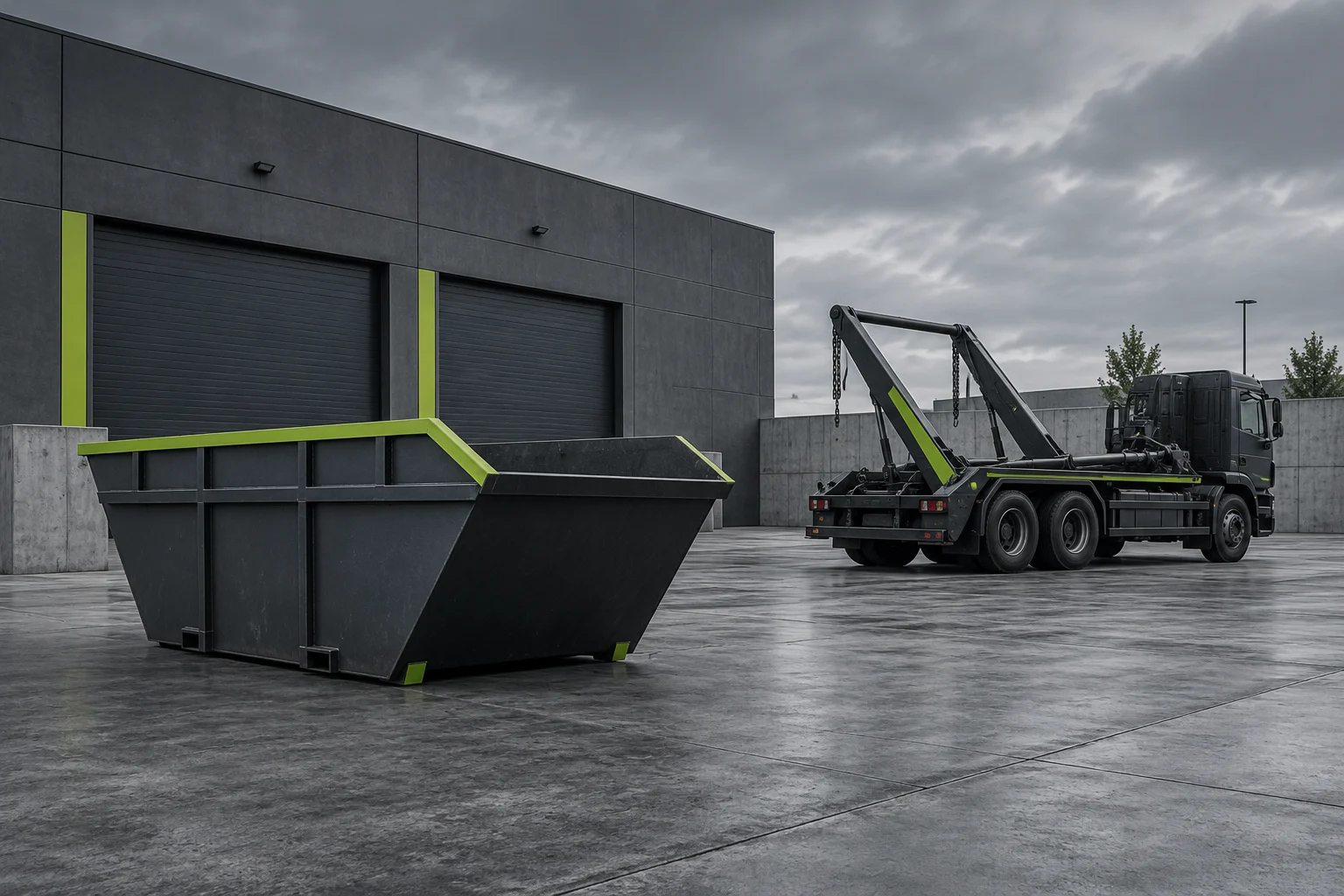
Skip and container arrangements need an agreed material description, loading limits and suitable position before delivery. Facilities teams managing refurbishment or clearance should establish volume, duration and collection access, keeping temporary storage requirements connected to permissions and the site's continuing activities.
What the work can include
- Review of the waste material and estimated quantity.
- Selection of the container and its intended position.
- Planning exchanges and final removal.
Identify work areas, retained items and completion information in the written scope. Reference container-related tasks by site and location across a portfolio so costs and remaining actions can be followed.
Our full service catalogue, including every individual service, is available across every listed sector and location. For one site or several, we agree the scope, access and programme around the buildings concerned.

Important decisions
Agree accepted contents, load limits and placement before delivery. A highway position or restricted access can introduce further requirements. Use site and waste-stream evidence to compare collections and understand contamination findings and reported activity.
Before we visit
Supply material type, estimated volume, proposed position, vehicle access and hire duration. Add site information, operational effects and approval limits, naming the local contact and windows compatible with essential activities.
How the work proceeds
The enquiry establishes the outcome and available records. Assessment reviews waste and volume with practical limits, then the agreed scope defines sequencing, protection and access before container work proceeds.
Reference completed tasks to the property or work area and record the result. Separate remaining actions so subsequent operational and budget decisions are based on the actual completion position.
What affects cost and timing
Container dimensions, weight, hire period, exchanges and location permissions shape the resources and timetable. A photo or general area description may not establish every part of the requirement.
For multiple sites, compare equivalent container tasks and access conditions before grouping them. Identify temporary operating arrangements and where additions to the brief need a decision.
Applications across sectors
Paper and packaging can drive office collections; hospitality adds food and service-area considerations. Industrial sites require the process materials involved to be described. The full sectors range sets out the wider application.
Local coverage
Black & White Facilities covers container requirements across Northumberland, Tyne and Wear, County Durham and Tees Valley in North East England. Include postcode and access for Newcastle, Gateshead, Durham, Middlesbrough or another covered area in the location directory.
Frequently asked questions
Can any waste be put in a skip?
A skip accepts only the contents agreed for its service. Hazardous and certain other materials require separate routes, and loading restrictions still apply.
What information helps define skip and container services?
Provide contents, expected quantity, proposed position, vehicle access and duration, with the outcome and fixed dates. Existing reports show which practical matters have already been investigated or agreed.
What most affects the price and programme?
Size, weight, hire duration, exchanges and placement permissions affect pricing. Confirm preparation, access and completion tasks in the scope so competing proposals cover equivalent work.
How should the finished work be recorded?
Record the property and instruction reference, location addressed and result. Keep any restrictions or unfinished tasks separate from the completed container work.
Guides and useful reading
Use waste and recycling planning guidance when planning the container instruction. Where an asset or building element also needs attention, Repair versus replacement supports comparison of its condition, cost and disruption.
The context for business collection and transfer responsibilities is explained in GOV.UK business waste responsibilities.
Related services and your enquiry
Return to the Waste and Recycling family for related Waste Audits and Management, Waste Compactors and Balers and WEEE, Battery and Lamp Recycling. The broader all services, maintenance, projects, sectors and locations directories help define connected requirements.
Contact Black & White Facilities with the site identifier, priority, authorised contact and records. Include waste type, volume, position, access and duration so the container arrangement can be scoped for the premises.
Discuss the scope
Tell us what needs attention.
Share the site, the issue and any access requirements so we can discuss the next step.