
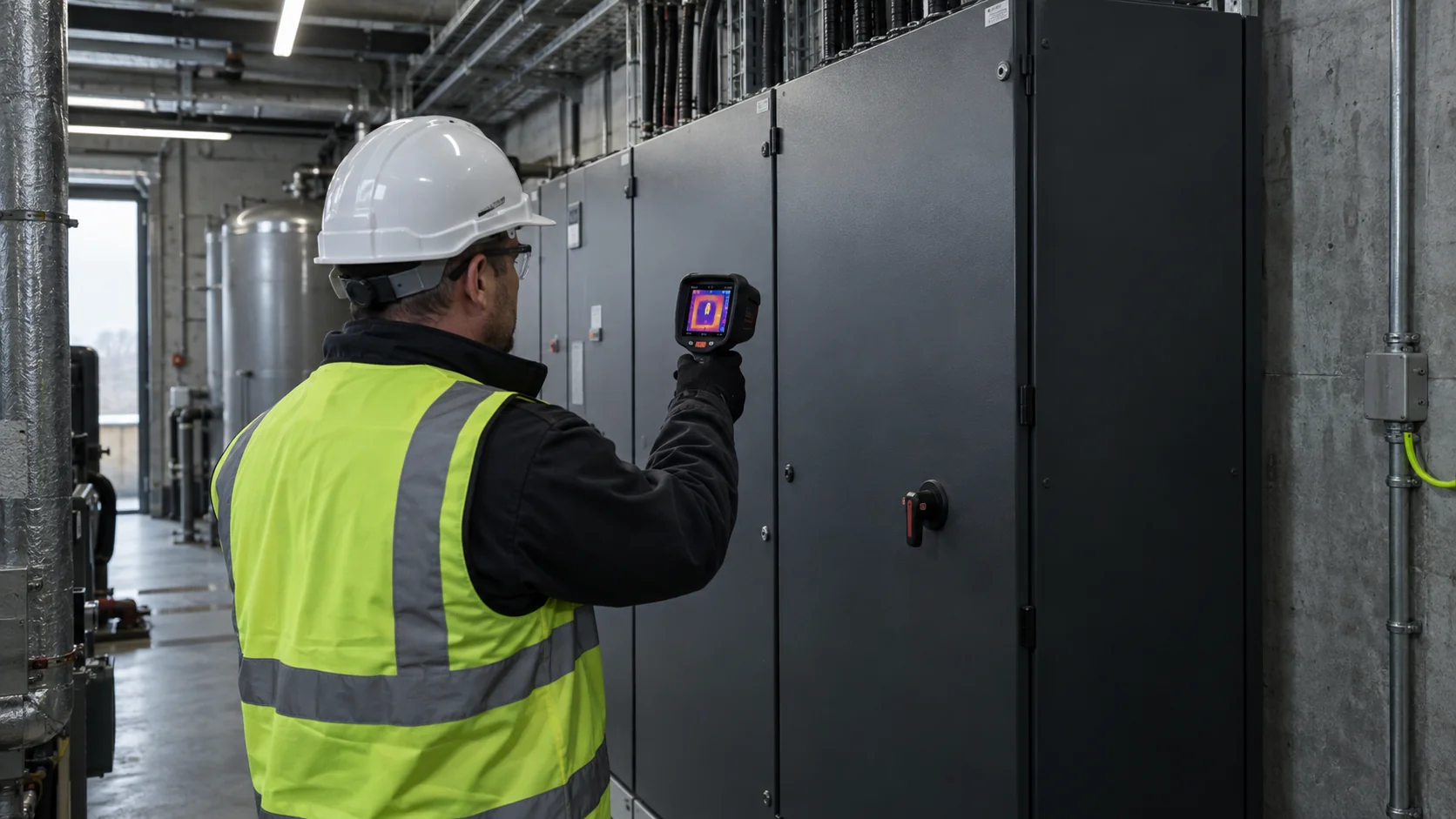
The method needs an observable deterioration pattern and enough lead time to act. Where failure gives no useful warning, another maintenance or resilience approach is required.
Start with the decision
Frame a specific question for an identified asset. A recurring fan-vibration change, for example, may warrant investigation of deterioration or may correspond to a different load.
Record asset purpose, fault history and the consequences of losing its service. Prediction has practical value when it changes a decision about inspection, parts, outage planning or component replacement.
Choose evidence that can answer the question
Evidence may come from repeated measurements, sensors, work reports or operating logs. The US Department of Energy maintenance guide includes vibration, temperature and lubricant analysis among condition techniques. Select a method appropriate to the equipment and failure mechanism being investigated.
Retain asset and measurement-point references, date, units and operating state. Load, settings or component changes may explain a trend; missing readings and sensor faults must remain visible rather than being absorbed into an apparently complete dataset.
Turn analysis into action
Keep the assessment’s three elements distinct:
- Observation: the pattern actually present in the measurements.
- Interpretation: possible explanations and the strength of supporting evidence.
- Recommendation: the next inspection, work or evidence needed.
Allocate review, escalation and site verification. A notification is an input to that process, not a confirmed diagnosis or automatic authorisation for attendance.
Feed physical findings and completed maintenance back into the record. Compare them with the earlier interpretation to determine whether the method supported a useful decision or needs revision.
Decide whether the effort is proportionate
Weigh data collection and interpretation against asset value, failure consequences and available history. Routine upkeep may suit a small replaceable item, while consequential equipment with detectable deterioration may justify closer analysis.
Keep required service, inspection and safe-operation arrangements. A normal-looking trend adds information; it does not remove the duties or controls already applicable to the equipment.
Common questions
How does this differ from condition-based maintenance?
Condition-based work responds to assessed condition. Prediction examines patterns to estimate developing problems or intervention needs. Define the intended decision and deliverables because usage of these terms overlaps.
Do we need artificial intelligence?
No. Technical judgement and trend analysis can be sufficient. Choose a method that fits the question and available evidence rather than beginning with a software category.
Can prediction eliminate breakdowns?
No. Some failures give little warning and measurements cover only selected conditions. State uncertainty and retain appropriate upkeep and response arrangements.
Related maintenance and guidance
Consider Predictive Maintenance, Condition-Based Maintenance and Remote and Condition Monitoring. Read how maintenance frequencies are determined, or discuss the equipment and decision with asset history and the intended maintenance decision.