
Black & White Facilities / Service brief
Sewage Treatment Systems
An off-mains treatment plant on a managed site needs its condition, alarms and discharge arrangement reviewed as part of the maintenance programme, not only when something fails. This page sets out how that review is scoped, what the site team should supply and how the findings separate maintenance from design or replacement. Symptoms inform the scope but do not confirm performance.
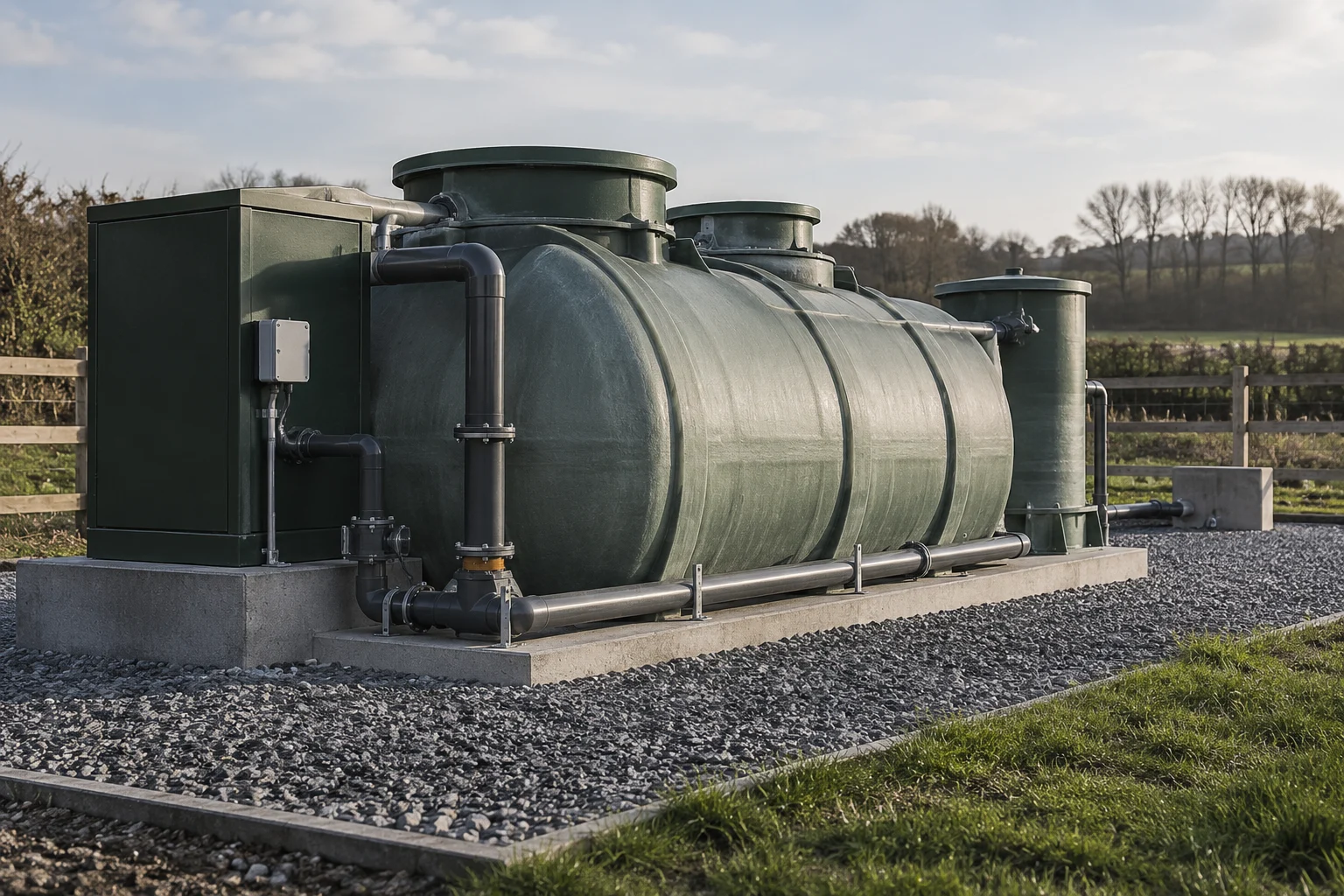
Overview
A treatment plant only works as a whole: the load it receives, its power supply, aeration, settlement, the discharge route and its maintenance all contribute. An empty-looking tank says nothing about whether the plant is operating as it should.
Our full service catalogue, including every individual service, is available across every listed sector and location. For one site or several, we agree the scope, access and programme around the buildings concerned.
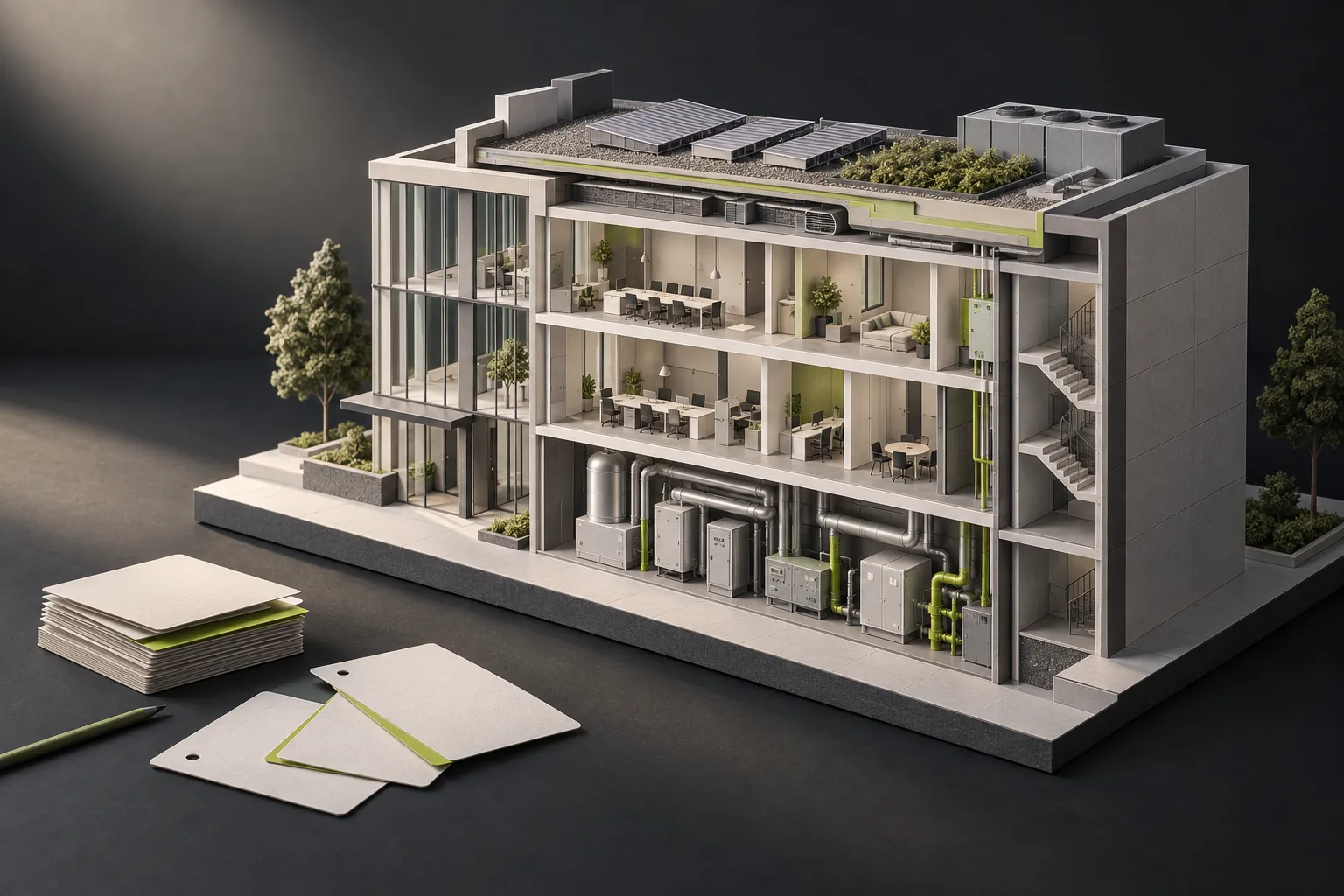
What the work can include
An instruction can cover identifying the plant, assessing its process and discharge, a defined maintenance scope, condition findings and a set of improvement options. The scope states how plant condition, alarm status and discharge considerations will be reported, and what is supplied or tested at completion. Repairs, design, testing or replacement are separate unless written into the scope.
At the end the client holds the plant condition, alarm status and discharge considerations, with any limitation, third-party interface and next action stated.
Important decisions
No guide is linked for this service because how a plant performs depends on the process installed and where it discharges, which only a site review can establish. Decisions should be taken with the site's operating limits and the client's approval route in view.
Before we visit
We ask for the plant type, any design or handover documents, occupancy and loading, the alarm history, access, the discharge route and the maintenance carried out to date. For an estate, identify each site separately and keep asset references consistent so plants are never confused.
Plant type, whatever design or handover information exists, loading, alarm history, access and discharge arrangement are the essentials. Say whether the requirement is routine maintenance, a repair or planning for improvement.
How the work proceeds
The plant and its operating context are established, the agreed assets inspected, condition and alarms recorded and maintenance items separated from anything that needs design or replacement. The record of condition, alarm status and discharge considerations is what the client uses to choose between maintenance, design and replacement.
What affects cost and timing
Plant type, access, any sampling or specialist input, the power supply, discharge arrangements, emptying and how the site is occupied all bear on price. For a managed site or estate, give the working window, the access contact and any shutdown constraints that apply to the plant.
Sector and property applications
Rural office sites, schools, retail premises and industrial units running their own treatment plant need the work planned around loading, power, access and the discharge arrangement. Use the sector directory to see the requirement for your building type.
Local coverage
Treatment plants across Northumberland, Tyne and Wear, County Durham and Tees Valley are within reach, including sites in Berwick-upon-Tweed, Alnwick, Morpeth, Hexham, Newcastle upon Tyne, Gateshead, Sunderland, Durham, Darlington, Hartlepool, Stockton-on-Tees, Middlesbrough and Redcar and Cleveland. Estate clients should hold each plant's condition, alarm status and discharge considerations in a separate record. Locations we cover.
Frequently asked questions
Are a treatment plant and a pump station the same thing?
No. A pump station lifts and moves wastewater; a treatment plant processes it. One site may have both, but the assets, controls, maintenance needs and performance questions are different. For an estate, keep each plant's record separate so the next service decision is clear.
Does a service visit confirm the discharge is compliant?
No. A service records the maintenance and condition tasks that were agreed. Discharge performance also rests on loading, the process, power, the discharge route and any testing or permission required. Where the visit affects occupiers or operations, agree access, shutdowns and contractor handovers before scheduling.
What should happen when the plant alarms?
Treat it as a condition that needs prompt investigation of the alarm itself, the power, the controls, the process equipment and the discharge. Follow the plant's instructions and stop any use that would be unsafe or uncontrolled. The completion report records what was covered, what was not possible and the follow-up required.
At what point is replacement the right call?
When condition, loading, the suitability of the process, access, discharge requirements, repeated failures or the cost of maintenance show that continuing to repair is no longer sound. Planned programmes should use the findings to decide whether further plant work or related repairs are needed.
Knowledge and guidance
There is no topic guide for this service, because performance depends on the process installed and the discharge arrangement, which have to be seen on site. What the assessment asks for is the information needed before work is agreed; on a managed site or estate it is considered together with operating duty, access and the approval route.
Related content and enquiry
Treatment-plant work relates to Drainage and Wastewater, Drain Cleaning and Maintenance, CCTV Drain Surveys and Planned Preventative Maintenance. For everything else, see all services, maintenance, projects, sectors and locations.
Contact Black & White Facilities with the site or estate, the plant concerned, any alarm or maintenance records you hold and the operating constraints. We can then set the client interface and scope out properly, without presuming a response time or an outcome.
Discuss the scope
Tell us what needs attention.
Share the site, the issue and any access requirements so we can discuss the next step.