
Black & White Facilities / Service brief
Drain Cleaning and Maintenance
Slow-running drains, restrictions that keep coming back, a build-up of deposits or a decision to put drainage on a planned schedule are the usual reasons to instruct this service. Set out which run is affected, how often the problem recurs and whether the aim is flow restored today or a maintenance plan for the year. The reported symptom informs the scope rather than diagnosing the drain.
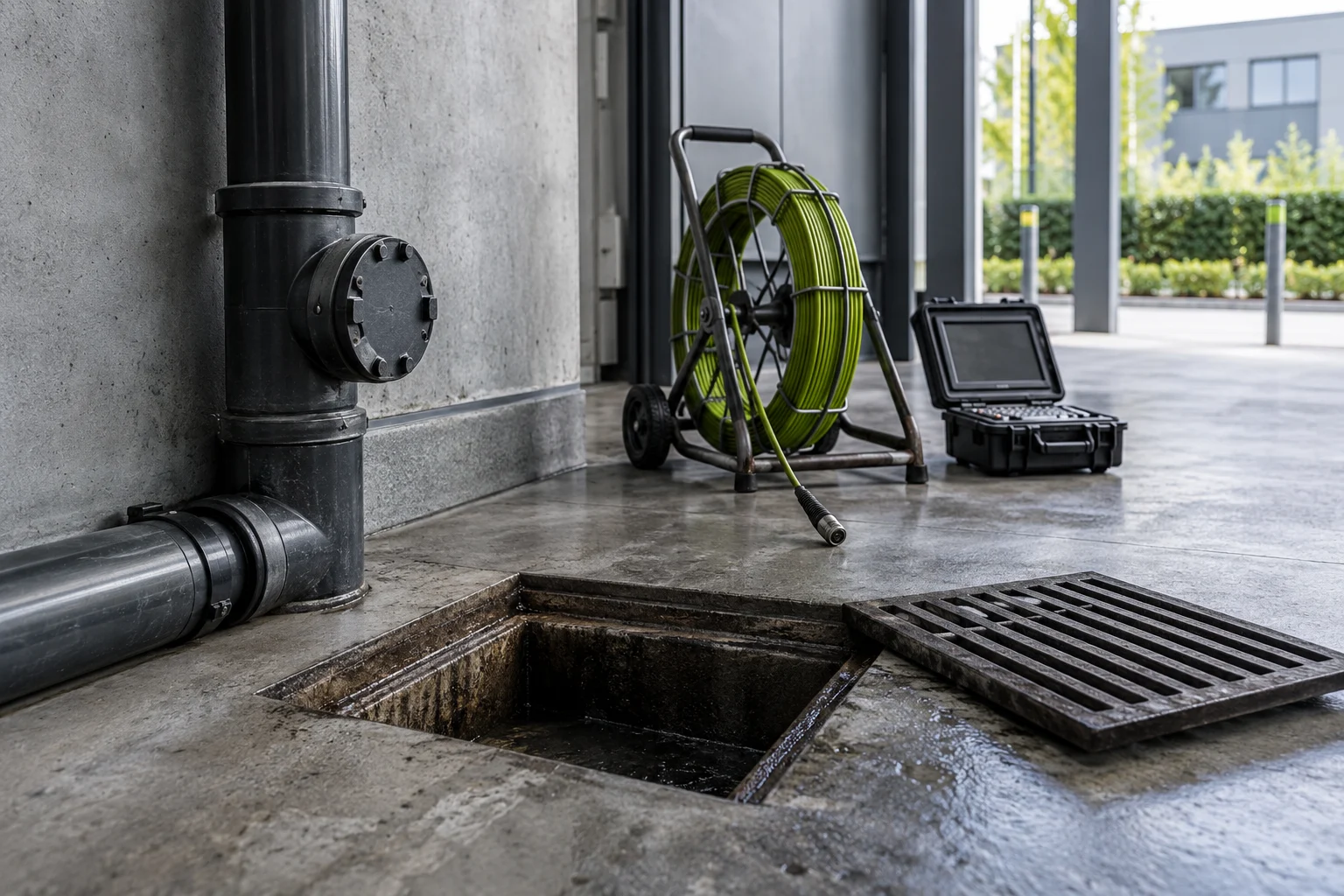
Overview
Cleaning brings flow back when deposits or an obstruction are holding it up. A run that keeps failing points to a survey or a repair, not another clean.
Our full service catalogue, including every individual service, is available across every listed sector and location. For one site or several, we agree the scope, access and programme around the buildings concerned.

What the work can include
The instruction can cover cleaning of named runs and their access points, observations during the work and a record of every restriction found. It states which runs are cleaned, how flow result and recurrence history are recorded and what is handed over or tested at the end. Repair, specialist design, testing or replacement are separate unless the instruction says otherwise.
The completion record gives the client the cleaned runs, the flow result on each and the recurrence history, with any limitation, interface with other trades and next step.
Important decisions
The judgement is when a repeatedly cleaned run should be investigated instead, so the maintenance budget is not spent treating a symptom. Take that decision in step with the site's operating constraints and the client's approval process.
Before we visit
Before booking, supply each run's location, blockage history, access permissions, known flow restrictions and whether the area is occupied or carries a contamination risk. For an estate, list every site individually and keep asset or area references the same across visits, so results are compared without mixing installations.
State which runs are affected, when they last blocked, who grants access and any restriction in occupied or contaminated areas. Say whether recurring problems should be investigated after the clean.
How the work proceeds
The runs are scoped, safe access arranged, the agreed system cleaned, findings written up and any run likely to fail again flagged with a recommended action. From the handover the facilities manager sets the next interval or decides an investigation is warranted.
What affects cost and timing
Scope and price move with run length, the deposits, ease of access, waste disposal and whether an investigation follows. On a managed building or estate, provide the operating window, access contact and shutdown constraints so the clean is timed around the site's use.
Sector and property applications
Office buildings, education sites, retail premises and industrial units each have hygiene rules, access arrangements and a need to keep the affected drainage in use. The sector directory puts each site type's requirement in context.
Local coverage
We work across Northumberland, Tyne and Wear, County Durham and Tees Valley, taking in Berwick-upon-Tweed, Alnwick, Morpeth, Hexham, Newcastle upon Tyne, Gateshead, Sunderland, Durham, Darlington, Hartlepool, Stockton-on-Tees, Middlesbrough and Redcar and Cleveland. For estate-wide cleaning, record cleaned runs, flow results and recurrence history site by site. Browse the locations list.
Frequently asked questions
Will cleaning stop a blockage recurring?
Not on its own. A clean restores flow where a deposit or obstruction is the cause, but a run that blocks repeatedly needs its pipe, connections or structure investigated. Across several sites, keep cleaned runs, flow results and recurrence history apart so the next decision on each is clear.
Can a maintenance programme cover every drain on the site?
Only where the instruction names them. A site-wide programme lists each run, access point and task included and states what is left out, rather than assuming every drain is covered. Where occupants or operations are affected, agree access, shutdowns and retained-contractor interfaces before scheduling.
What goes in the record after a clean?
The runs and access points cleaned, restrictions encountered, the flow result, any unreachable section and any recommendation for a survey, repair or changed frequency. The completion information should make clear what was done, what was not and what follow-up is needed.
Can cleaning go ahead in or near occupied areas?
Yes, provided access, water handling, protection and the working window are planned around the people using the space. The scope should set out expected noise, odour, temporary restrictions and handback. On a planned programme, findings decide whether further cleaning or related remedial work is added.
Knowledge and guidance
The guide on why drain blockages recur explains the pattern behind repeated restrictions and when cleaning should give way to investigation. The service assessment applies that guidance to the building or estate, alongside operating duty, access and the client's approval route.
Related content and enquiry
For this service the related pages are Drainage and Wastewater, Emergency Drain Unblocking and Planned Preventative Maintenance. The wider index covers all services, maintenance, projects, sectors and locations.
Contact Black & White Facilities with the site or estate, the runs to be cleaned, any flow results and recurrence history held, other records and operating constraints. We use that to agree the working interface and scope, without presuming a response time or result.
Discuss the scope
Tell us what needs attention.
Share the site, the issue and any access requirements so we can discuss the next step.