
Black & White Facilities / Service brief
Facilities Dashboards and Reporting
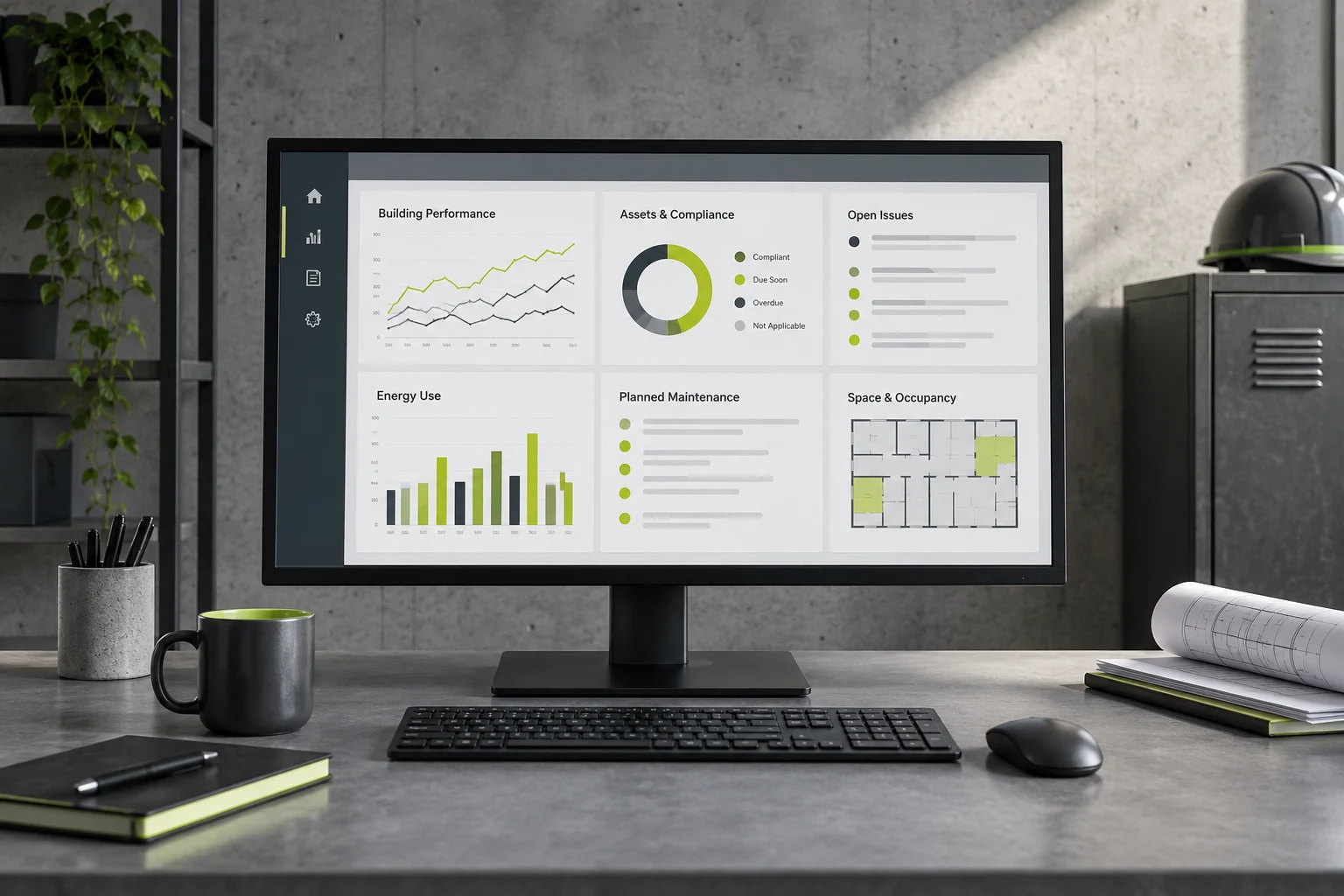
Facilities reporting should make the current position understandable to the people responsible for action. Where spreadsheets conflict or status colours lack explanation, define the reader and decision first, then show the source period, evidence and unresolved issues instead of giving incomplete records an appearance of certainty.
Overview
Explain the reporting outcome needed by the facilities team and the immediate problem with the current information. Identify the affected locations and people, including any altered use of the premises, so the assessment reflects current operations rather than reproducing the previous reporting arrangement.
Our full service catalogue, including every individual service, is available across every listed sector and location. For one site or several, we agree the scope, access and programme around the buildings concerned.

What the service can include
Agree indicators, source records, update intervals, user views and permissions. Specify the supporting detail behind each result and the actions attached to exceptions. Handover definitions should explain precisely how the report treats completed work, overdue items and unresolved findings.
What to consider
Keep the meaning and context of every measure consistent. Attendance does not establish that a fault was repaired; absent evidence does not establish a satisfactory result. These states need to remain visible separately rather than disappear behind a single positive status colour.
The reporting proposal distinguishes our included work from the responsibilities retained by the building team. Connected repair and specialist activities are scoped separately, making it clear which tasks others must arrange and the records that each participant can expect.
Before we visit
Supply current reports, asset references, existing definitions and the decisions the reporting must support. Name source owners and relevant review meetings. Establish the period covered and the route by which exceptions reach the team responsible for acting.
How we help
We clarify the reporting purpose and resolve differences in data definitions. Users review views shaped around their decisions. The handover identifies ownership of each source, update arrangements and the treatment of information that is missing or disputed.
Across an estate, agree a common approach to reporting and escalation without losing site contacts and local operating requirements. Associate actions with their building or service area, and name the route for decisions with wider operational consequences.
What affects cost and timing
Budget requirements depend on the number and quality of sources, reporting complexity and automation. Establish how refreshes and support will continue. A small dependable report can serve the team better than numerous measures with no assigned owner.
Provide working hours, sensitive periods and the activities that must remain operational. The quotation and programme should allow for those constraints, with phasing, extra access provisions and the information needed by the team managing delivery.
Sector applications
Reporting requirements sit within different operating contexts across all sectors. Teaching affects access in education; guest areas and food activity shape the brief in hospitality. Trading and deliveries need attention in retail, while offices requires coordination with staff and visitors. Service and project arrangements respond to the actual premises.
Local coverage
For dashboards and reporting, our coverage includes Northumberland, Tees Valley, Tyne and Wear and County Durham. Locations range across Berwick-upon-Tweed, Alnwick, Morpeth, Hexham, Newcastle, Gateshead, Sunderland, Durham, Darlington, Hartlepool, Stockton-on-Tees and Middlesbrough. See the location directory.
Attach the appropriate contact and working limits to each address in a multi-site reporting brief. Keep differences between premises recorded even when the overall instruction is shared.
Frequently asked questions
Can a dashboard replace source reports?
No. The people using the dashboard still need its source evidence and an explanation of the indicators.
Should missing data appear as compliant?
No. Show absent evidence separately from a result that has actually been confirmed.
Can reports refresh automatically?
Automation can be scoped where permissions and suitable interfaces are available, including arrangements for failures.
Can different sites use the same measures?
Yes. Apply agreed definitions consistently and keep the relevant differences between buildings visible.
Knowledge and guidance
For the reporting brief, use building management systems explained and recording maintenance evidence as supporting reading. Official guidance provides the wider service context, and the Knowledge Centre brings together additional material for the facilities team.
Related services and your next step
Reporting can connect to Smart Buildings and Facilities Technology and Digital Logbooks and Compliance Records. Review the implications for maintenance and Minor Works, then use the services and projects directories to explore the complete offering.
Contact Black & White Facilities with the sites covered, the reporting decision and existing records. Set out the outcome required and operational restrictions so the scope and next step can be defined for the people using the reports.
Discuss the scope
Tell us what needs attention.
Share the site, the issue and any access requirements so we can discuss the next step.