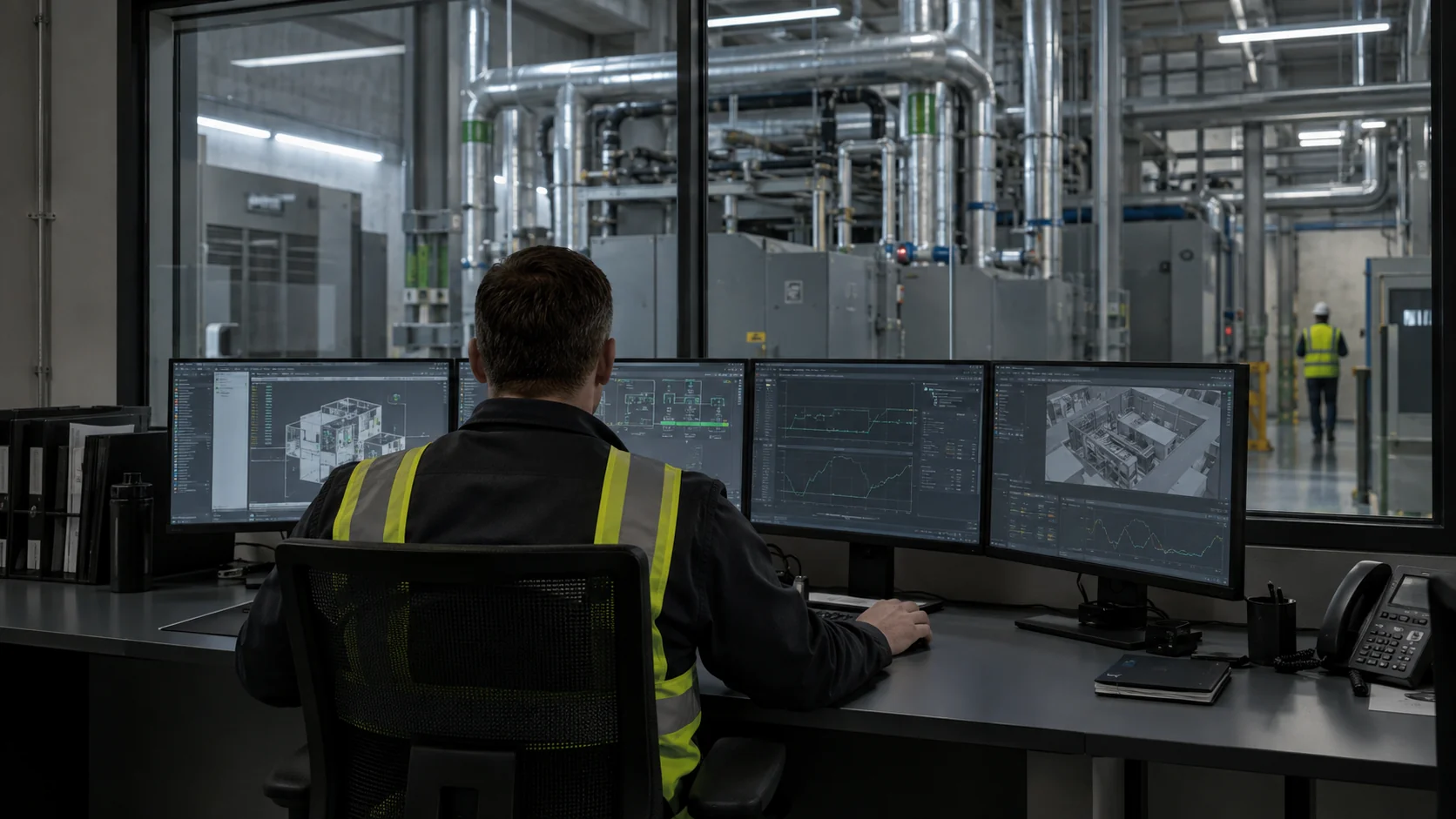
Siemens’ Desigo Control Point operation manual describes scheduling, alarms and trend functions. Document those configured at the premises and the equipment included. Trends are readings recorded over time, useful for comparing an incident with earlier and later operation.
Understand what the screen represents
Distinguish a start command from feedback that a fan is running, and both from measured airflow in a served room. Define each displayed status so reports do not imply performance that the point does not measure.
Temperature readings concern a sensor’s location; valve commands describe a requested position. Neither establishes whole-system performance alone. Correlate control records with the physical plant and occupied spaces during investigation.
Establish ownership of settings and alarms
Maintain an authorised-user record and document schedules and significant settings. Review them when occupation changes so the current building does not continue operating to a previous tenant’s timetable.
Assign alarm recipients, the information needed for response and escalation of unresolved issues. Acknowledgement on the interface records a user action, not completion of the physical repair.
Where remote access exists, define its ownership and access arrangements. Monitoring coverage, response commitments and attendance requirements must be agreed separately from enabling the connection.
Prepare for maintenance or a controls change
Gather system scope, plant lists, drawings, settings and relevant fault history. Coordinate controls and mechanical specialists where the investigation crosses the boundary between an instruction and the equipment’s response.
Record baseline settings, the intended change and its authority before adjustment. Check affected plant and rooms afterwards. Retain results and document temporary overrides so they do not conceal faults or prevent normal sequences resuming.
Frequently asked questions
Does a BMS replace mechanical maintenance?
No. A BMS supplies controls and operating evidence. Physical inspection and maintenance remain necessary for fans, filters, valves and other connected equipment.
Does an alarm always identify the failed component?
No. An alarm describes a condition detected by configured logic. Sensors, controls, plant or connected services may explain it; diagnosis must establish the cause.
What should a new property manager request?
Request the configured scope, authorised access, schedules, alarm owners, documentation and open faults. Include an explanation of operation: handing over credentials alone does not establish usable understanding.
Related guidance and services
Read what an air-handling unit does and HVAC balancing for connected-system context. Explore Smart Buildings and Facilities Technology, Air-Handling Units and Building Services Upgrades when defining the work.
Review services, maintenance, projects, sectors, locations and the knowledge centre, or discuss the building requirement with the configured scope and symptoms.