
Black & White Facilities / Service brief
Hazardous and Clinical Waste
Hazardous and clinical streams need identification before the site agrees storage or collection. Facilities managers should establish the material's origin, properties and quantity, with available safety information and a defined handling route, rather than treating all chemicals or contaminated items as one waste category.
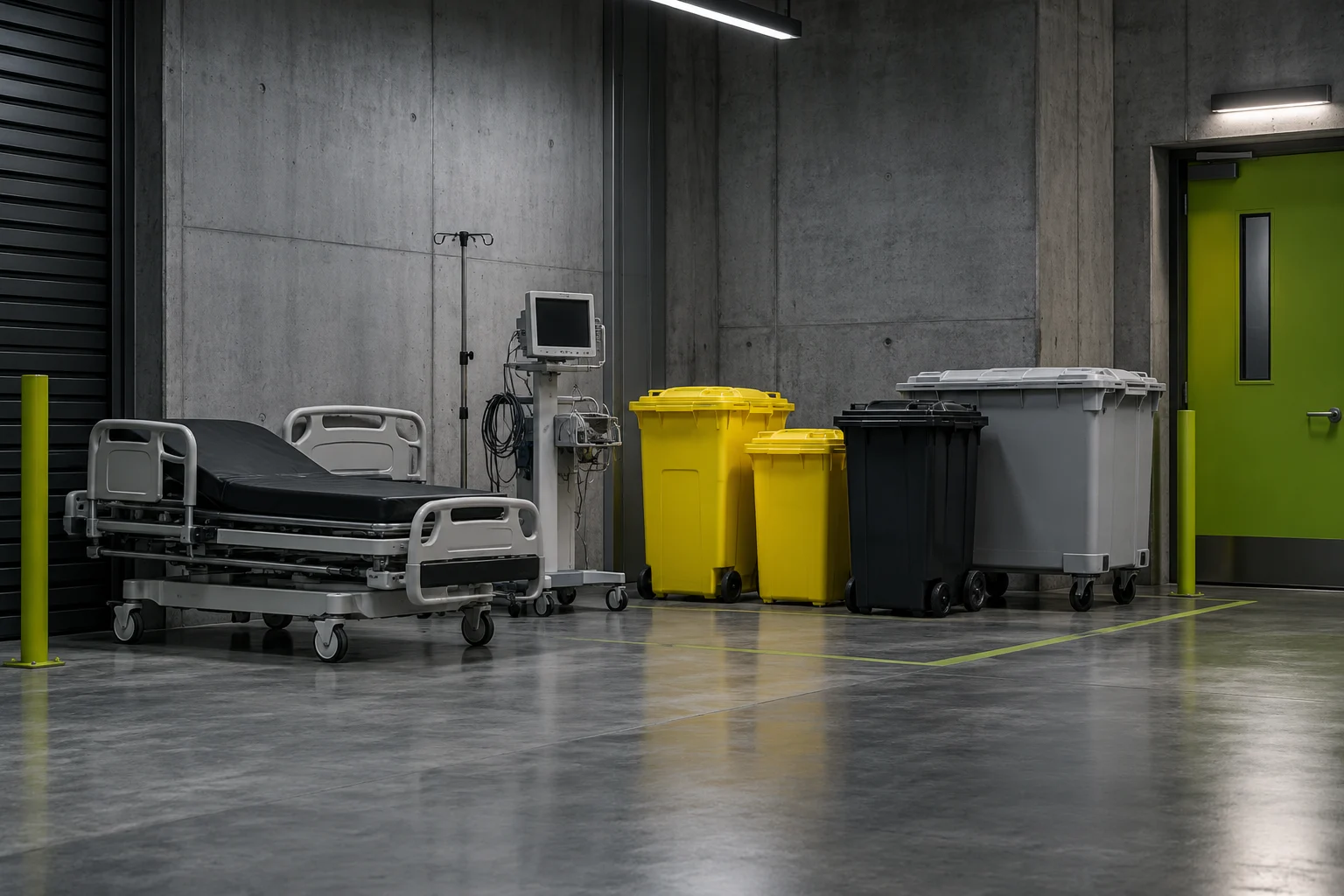
What the work can include
- Input to identification and classification of waste.
- Planning appropriate containment and collection.
- Definition of the required movement records.
Specify the affected work areas, items to retain and completion evidence. In a portfolio brief, locate the material by site so costs and follow-up duties can be attributed.
Our full service catalogue, including every individual service, is available across every listed sector and location. For one site or several, we agree the scope, access and programme around the buildings concerned.

Important decisions
Clinical and hazardous streams have different characteristics; origin, contents and properties determine handling and documents. Use waste and site records to compare collections, assess contamination and distinguish reported measures from assumptions.
Before we visit
Supply the description, source, quantities, safety information and storage conditions. Include site records, operational impact and approval limits. Name the local contact and suitable windows around critical activities.
How the work proceeds
The enquiry establishes the desired outcome and available information. Assessment confirms the identification and classification input and practical scope limits before the method sets collection sequence, protection and access.
Record the completed work against its premises or room reference, with results and unresolved actions distinct. This supports later decisions without presenting outstanding handling requirements as finished.
What affects cost and timing
Classification, packaging, volume, access and treatment route influence cost, resources and duration. A picture or general description of the area may not establish the full handling requirement.
For several premises, compare equivalent waste tasks and access assumptions before combining the programme. Identify interim operational provisions and how extra work is authorised.
Applications across sectors
Office collections may involve regular paper and packaging, while hospitality introduces food and service-area restrictions. Industrial sites need process-related materials accurately described. The complete sectors range provides the wider setting for those planning decisions.
Local coverage
Black & White Facilities covers Northumberland, Tyne and Wear, County Durham and Tees Valley. For hazardous or clinical-waste enquiries in Newcastle, Gateshead, Durham, Middlesbrough or another covered North East area, include postcode and access information; see the location directory.
Frequently asked questions
Can unidentified chemicals be collected with ordinary waste?
Do not assume an unknown chemical is suitable for ordinary collection. Establish its identity and an appropriate handling plan before agreeing where it goes.
What information helps define hazardous and clinical waste?
Provide the material description, origin, quantities, safety details and holding conditions. Add the result required, fixed access dates and prior findings so assessment does not duplicate or assume earlier decisions.
What most affects the price and programme?
Compare classification, packaging, quantity, vehicle access and treatment arrangements. Preparation and completion evidence need to be explicit alongside collection duties in the agreed proposal.
How should the finished work be recorded?
Retain site and job references with the result and areas addressed. List incomplete actions and limitations separately so the estate file accurately reflects the work.
Guides and useful reading
Use waste and recycling planning guidance to structure collection decisions. Where a building element or asset also needs work, Repair versus replacement explains the separate comparison of condition, cost and disruption.
The wider duty-of-care context is available through GOV.UK business waste responsibilities.
Related services and your enquiry
Related requirements within Waste and Recycling include Recycling Services, Skip and Container Services and Waste Audits and Management. Explore all services, maintenance, projects, sectors and locations when the instruction extends beyond the identified waste stream.
Contact Black & White Facilities with the property reference, priority, authorised person and supporting records. Supply the origin, quantity, safety information and storage conditions so the next assessment has a clear factual basis.
Discuss the scope
Tell us what needs attention.
Share the site, the issue and any access requirements so we can discuss the next step.