
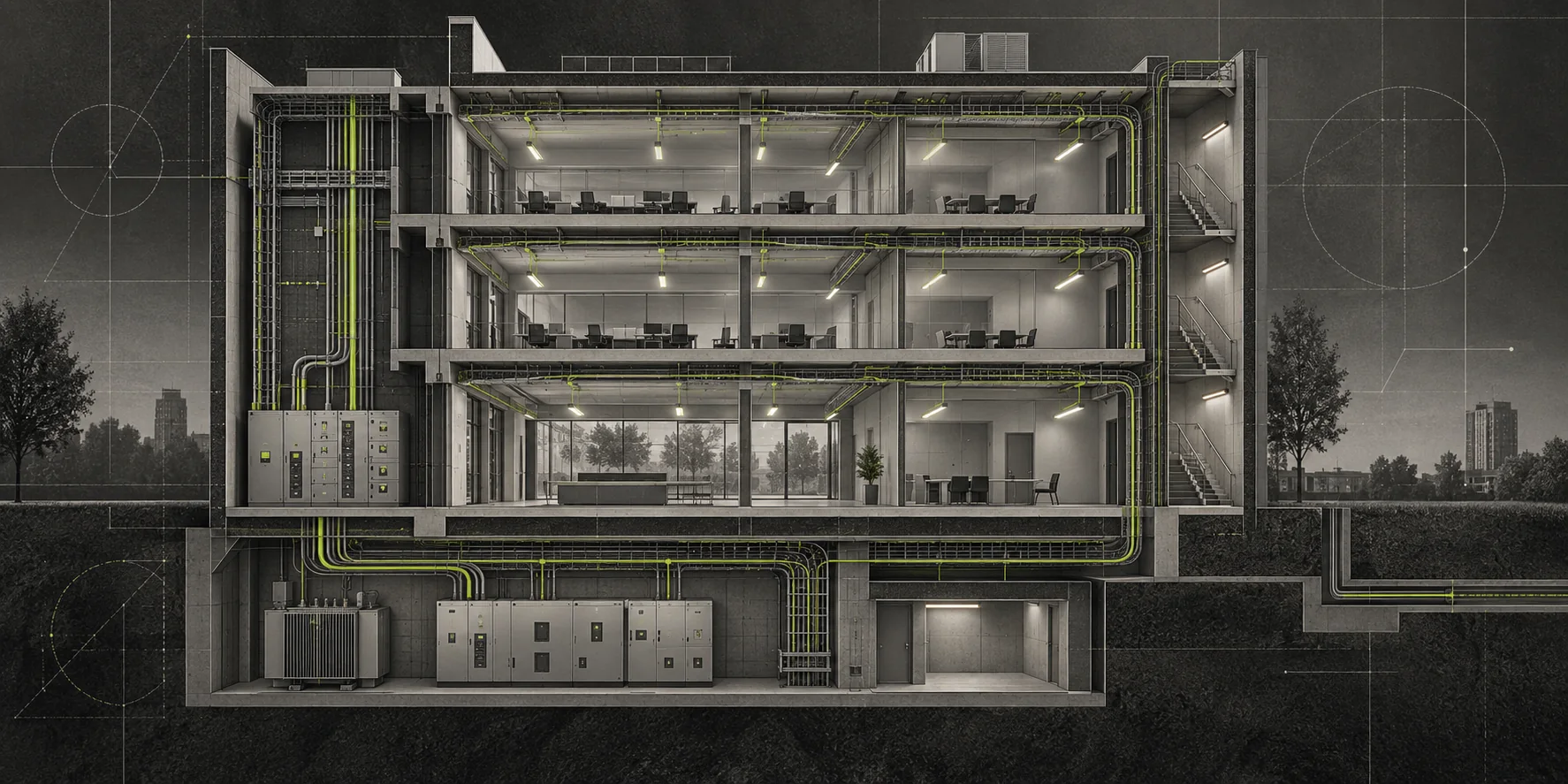
Electrical services define the building installation and isolation limits for power, lighting and testing tasks.

Transport and infrastructure premises put public areas, staff accommodation, depots and workshops beside assets that are governed by their own operator, with their own rules on who goes where and when. Facilities work on the buildings therefore starts with the boundary: which asset is the estate team's, which access route the operator controls, and which windows are available. Records tie each visit to that agreed scope.
Discuss your requirementsEstablish the permitted area, operator contact, authorisation, escorts and restricted periods. Confirm site-specific competence or approval requirements before assigning resources. None of those permissions follows automatically from receiving an instruction for general building work.
Separate the building task from interventions in operational transport systems. Identify where alarms, access equipment, services or circulation routes connect to assets controlled by the operator. Agree the permission and restoration process before attendance progresses to work.
Electrical services define the building installation and isolation limits for power, lighting and testing tasks.

Building fabric repairs account for the relationship between the property task, public occupation and operational activity.

HVAC and refrigeration covers comfort and ventilation installations serving the occupied or support areas specified.

Plumbing and water services coordinate washroom and system tasks with attendance restrictions and how the site is used.
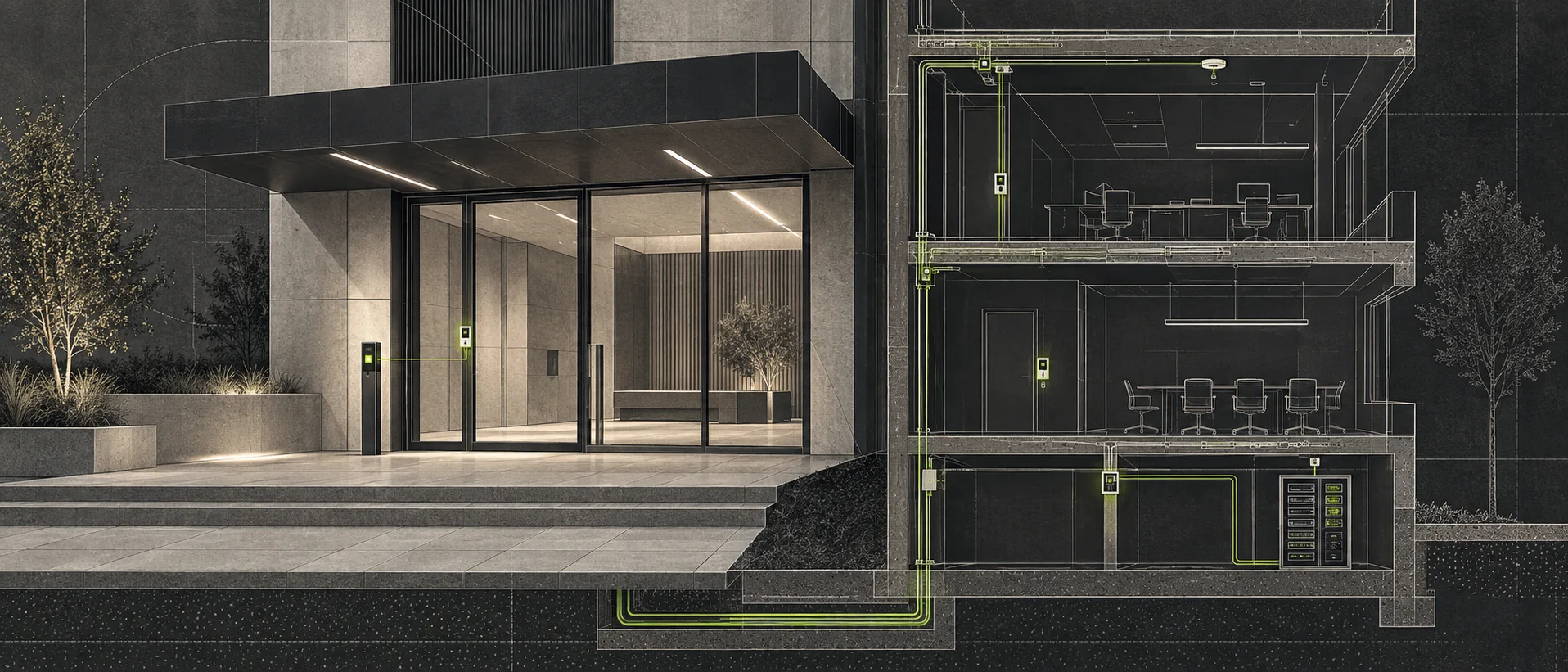
Security, access and telecommunications establishes the operator permissions and connected interfaces for the defined property-system work.

Grounds and external maintenance concerns access routes and external property areas expressly included in the work boundary.
Use the complete service catalogue to identify other trades required for the premises. The instruction defines the property task and any specialist systems included. A range of available services does not imply authority over adjacent operational infrastructure.
Our full service catalogue, including every individual service, is available across every listed sector and location. For one site or several, we agree the scope, access and programme around the buildings concerned.
Minor works provide a route for improving staff or support accommodation. Building services upgrades focus on property installations, with programme management coordinating dependencies and operator windows across locations. Other routes appear in the project directory.
Identify each building asset and its attendance conditions in the planned maintenance schedule. Reactive repairs require the same boundaries to be established, even under urgent circumstances. Infrastructure beyond the property scope remains subject to its own specialist arrangements.
Define the property asset, operator connections and approvals in the scope. Follow the agreed communication and access arrangements during delivery, then provide completion evidence to the site team responsible for the premises.
Preserve the asset position, completed tasks, applicable test evidence and any continuing restriction. Use the operator’s approved route for sensitive information. Assign an owner and next step to unresolved defects so they remain actionable after the visit.
Our recorded locations include Newcastle, Gateshead, Sunderland and Durham and areas across Northumberland, Tyne and Wear, County Durham and Teesside. A North East England estate instruction should list every proposed address and the local operational contact.
No. The agreed instruction identifies the included property systems. Rail, airside, highway and other operational infrastructure needs an appropriate specialist scope and the relevant operator’s approval.
Yes. Include approval, readiness, task sequence and hand-back in the programme. All those steps must be considered within the period the operator makes available.
Give the precise position, service affected and consequence for operations. Identify the access contact and describe restrictions or controls already applied at the site.
Yes. Common tasks can be coordinated, provided the individual scope, attendance rules and completion evidence remain identifiable for every support building.
Prepare with the refurbishment scope guide and property handover checklist. The HSE workplace transport guidance explains context relevant to pedestrian and vehicle interfaces.
Related settings include warehouses and logistics sites, public or community buildings and manufacturing premises. Explore services, maintenance, projects, all sectors and coverage information.

Contact Black & White Facilities with the premises, assets, operator conditions and available access periods. Name the operational contact authorised to coordinate the instruction.
Discuss your requirements