
Black & White Facilities / Service brief
Graffiti Removal
Paint, marker and etched or adhesive deposits behave differently on brick, stone, metal and coated surfaces, so removal starts with a test rather than a fixed method. The aim is to clear the marking without changing the finish underneath. Describe the surface, what the marking appears to be and whether anything has already been tried on it.
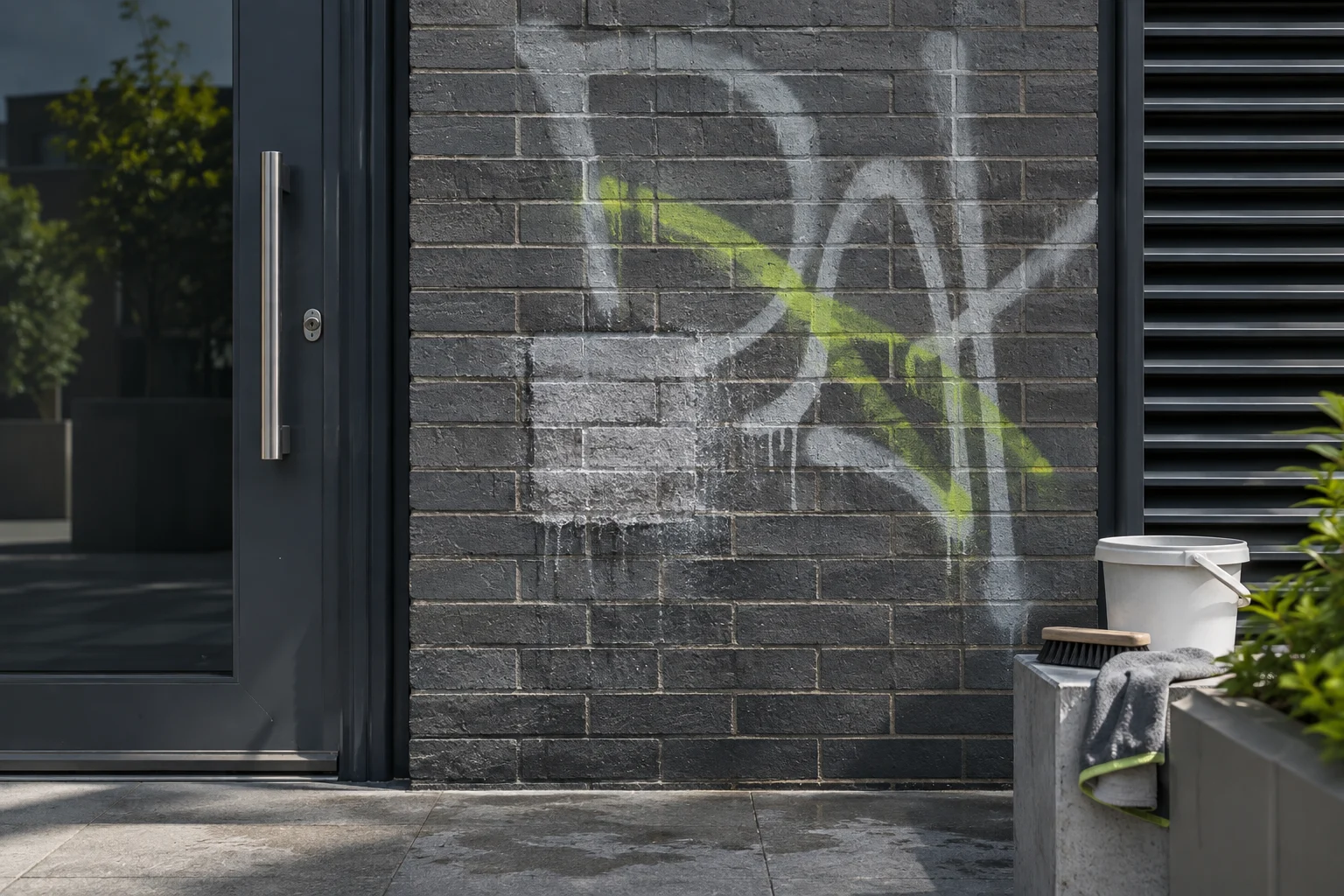
What the work can include
- Assessment of the surface and the marking material.
- Treatment of a test area first.
- Agreed removal with residue and runoff controlled.
The written scope names the surfaces to be treated, anything to be left untouched and the information supplied at completion, with a site and location reference on each surface where several sites are involved.
Our full service catalogue, including every individual service, is available across every listed sector and location. For one site or several, we agree the scope, access and programme around the buildings concerned.

Important decisions
Weigh full removal against the chance of altering the finish beneath. Where pigment has soaked into a porous surface, complete removal may not be possible and the scope should say so. Graffiti removal is usually reactive, so agree in advance how it is reported alongside the routine cleaning contract.
Before we visit
Provide photographs, the surface type, the likely marking product and details of any earlier removal attempt, with site records that apply, the effect on operations and any cap on local approval. Give the local contact and when work can take place without disrupting critical activity.
How the work proceeds
The enquiry sets the result wanted and collects the information already held. An assessment then looks at the surface and the marking together and draws the practical boundary of the instruction. Method, sequence, protection and access are settled before work starts.
On completion the work is logged against the site and location reference, the result recorded and any remaining action separated from what has been done; the estate's maintenance plan and budget then work from that record.
What affects cost and timing
Surface porosity, access, how long the marking has been there, the test work needed and containment of residue are the main variables. They determine the resource, sequence and time on site; a photograph or a rough area will not fix the scope on its own.
If the same problem recurs at several sites, make sure the tasks and access assumptions match before combining them into one programme, and agree the interim arrangements and the point at which extra work would be authorised.
Applications across sectors
Offices need external work coordinated with the desks and meeting rooms in use behind the facade; education sites need controlled access while rooms are occupied; hospitality premises need food areas and service periods kept clear. See sectors for the complete range of settings.
Local coverage
Black & White Facilities operates across North East England, from Northumberland through Tyne and Wear and County Durham to the Tees Valley. Include the postcode and access details whether the site is in Newcastle, Gateshead, Durham, Middlesbrough or another listed area; the location directory has the full coverage.
Frequently asked questions
Will removal leave a visible trace?
It can, depending on the substrate, the pigment and any treatment already applied. A test area shows what the finished result is likely to look like and whether the original finish is at risk.
What information helps scope graffiti removal?
Photographs, the surface type, the likely marking product and any earlier removal attempts, plus the outcome wanted and any dates already fixed. Notes from any earlier attempt prevent the same method being tried twice.
What most affects the cost of graffiti removal?
Surface porosity, access, the age of the marking, test work and residue containment. Have the scope name the preparation, access and completion activities inside it, so every proposal is judged on the same basis.
How should completed removal be recorded?
Against the site and work reference, naming the surfaces treated and any remaining action. Limitations are logged on their own so the estate record is not misleading.
Guides and useful reading
The cleaning and hygiene planning guidance sets out the decisions behind the service; if a marked element might be replaced rather than cleaned, repair versus replacement shows how to compare condition, cost and disruption.
For the broader working context around cleaning, the HSE's guidance applies.
Related services and your enquiry
Cleaning and Hygiene is the parent page for this group. Other services nearby are gutter cleaning, high-level facade cleaning and hygiene consumables and replenishment; beyond this group, all services, maintenance, projects, sectors and locations cover the wider requirement.
Contact Black & White Facilities with the site reference, priority, the contact who can authorise work and any records on file, plus photographs, the surface type, the likely marking product and any previous removal attempts where available, so the next step is scoped around the actual surface.
Discuss the scope
Tell us what needs attention.
Share the site, the issue and any access requirements so we can discuss the next step.