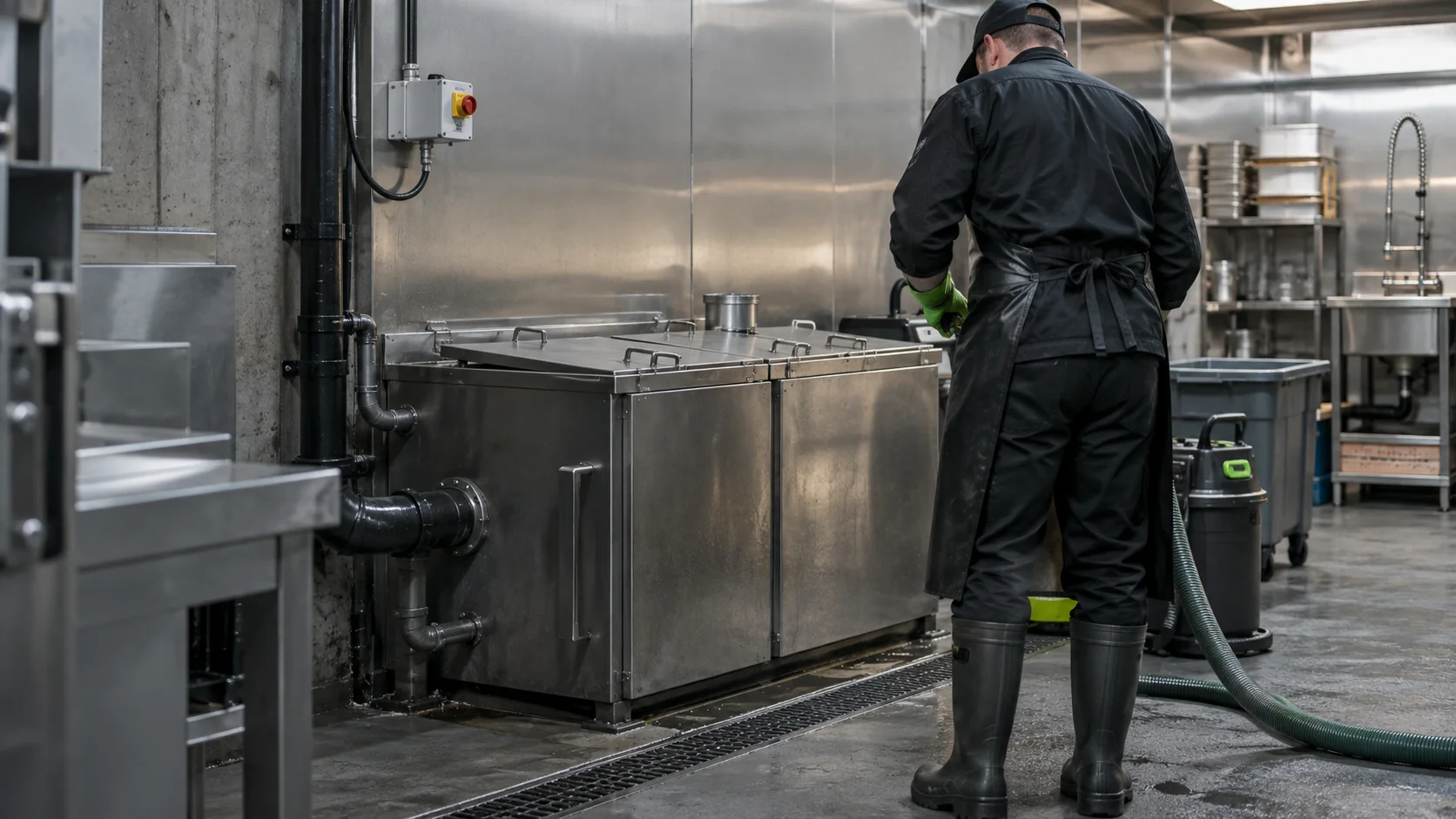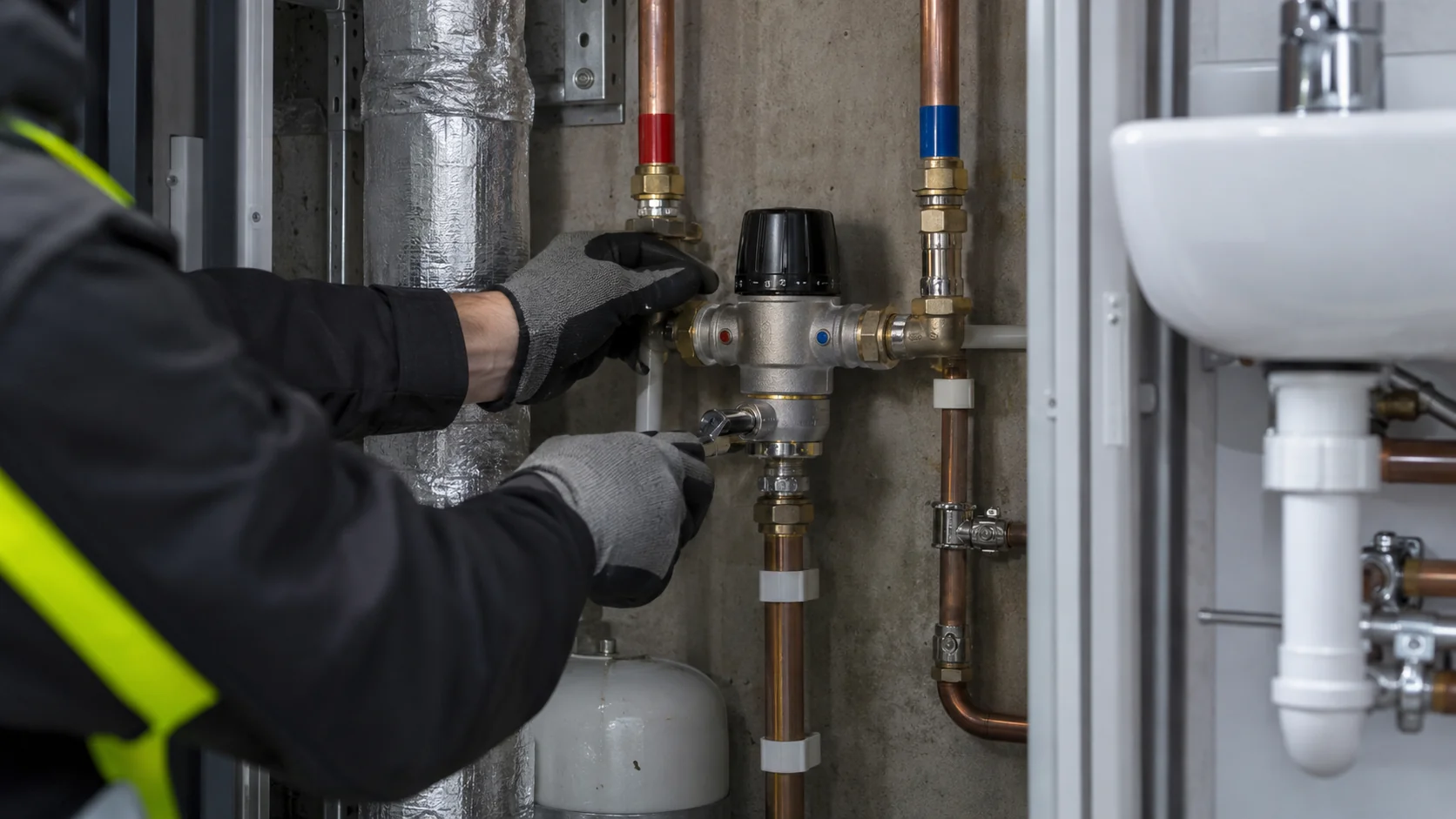
Roots, displaced joints, deformation and broken sections can trap material. Poor fall or persistent low points also need investigation. Increasing clearance frequency does not repair these physical conditions.
Causes can interact: a rough joint may catch wipes while grease narrows an already poorly draining pipe. Establish evidence before deciding between disposal changes, maintenance and repair. Fats cool downstream, so hot-water disposal does not remove grease risk.
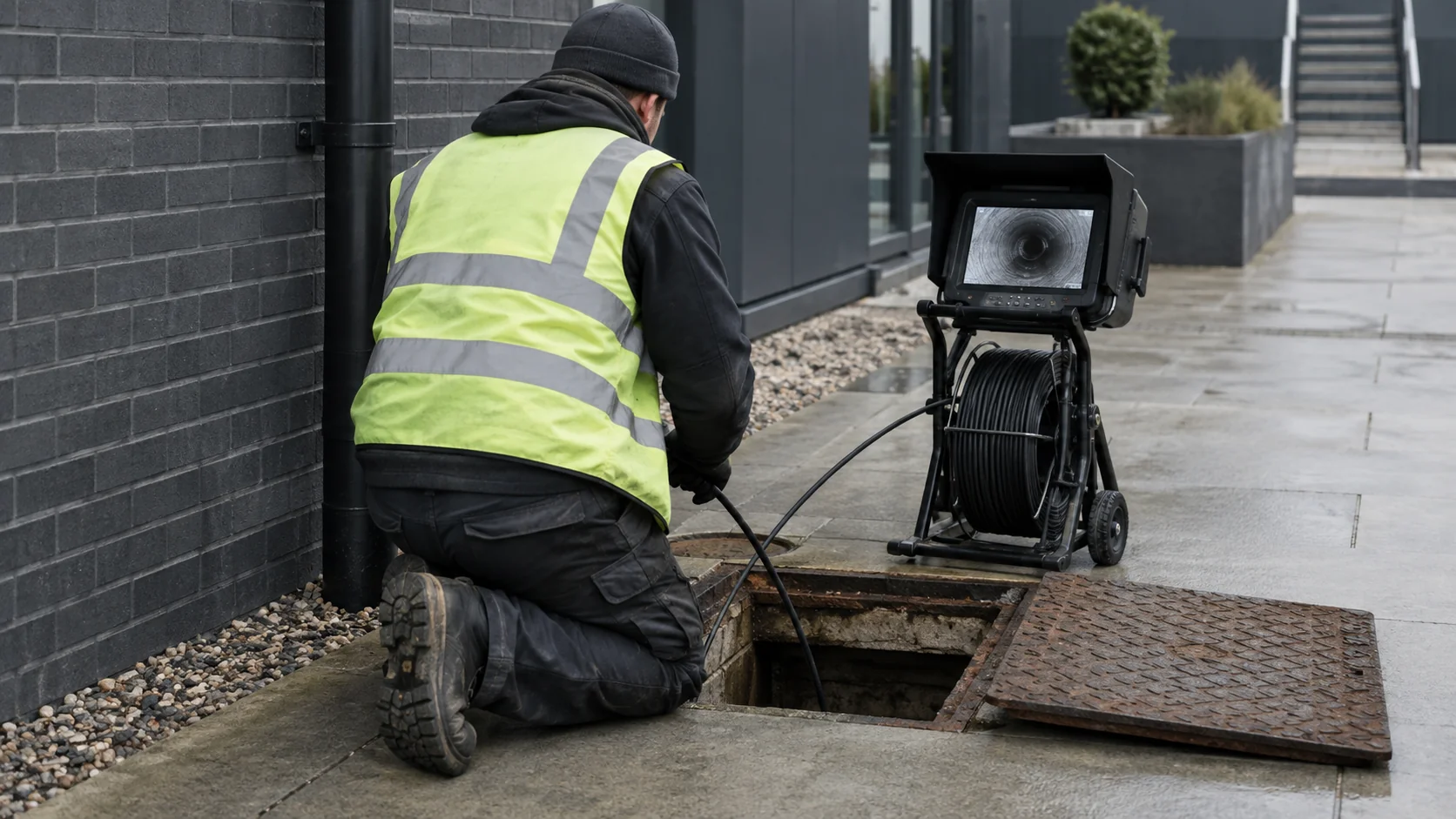
If the cause of recurring blockages needs further investigation, explore CCTV drain surveys.
Use the symptoms to narrow the investigation
Local symptoms can guide access: one basin suggests its waste connection, while several fittings backing up suggest a shared restriction. Rain-related incidents need investigation of surface-water routes and downstream conditions, not an automatic foul-drain diagnosis.
Retain a concise incident history covering:
- Date, affected areas and the observed backup level.
- Weather and building activities before the event.
- Removed material and its identified location.
- Work undertaken, accessible references and available footage.
- The period of normal drainage following intervention.
Use these observations to scope access and investigation. Gathering a report does not require staff to enter chambers or handle contaminated waste.
Investigate after clearance
Agree camera coverage and whether cleaning is needed to create visibility. A CCTV report must distinguish observed defects from pipework still obscured or beyond accessible inspection.
Connect each recommendation to the finding: deposit removal, grease-management changes, a defined repair or downstream investigation. A clearance record describes an activity but does not explain why the blockage recurs.
Establish ownership before commissioning work outside the site boundary. Northumbrian Water's wastewater guidance indicates where assistance with sewer problems can be sought; shared and adopted routes can involve different responsible parties.
Choose a proportionate prevention plan
Match prevention to the demonstrated cause. Change inappropriate disposal, clean according to accumulation and repair evidenced defects. Retain completion information and assess whether the original symptoms return.
Specify the covered drain sections and triggers for earlier attention. This gives the site team a reporting route while avoiding an unsupported common interval for every drain.
Frequently asked questions
Does a repeat blockage always mean a collapsed drain?
No. Waste deposits, roots and local restrictions can also recur. Inspection evidence determines the explanation for the affected run.
Should the drain be surveyed before or after cleaning?
Choose the sequence according to visibility and access. Cleaning may improve inspection, while initial footage can preserve evidence of a restriction before removal.
Will regular jetting solve the problem permanently?
No universal permanent outcome follows. Jetting can remove suitable deposits but does not repair all structural problems or prevent unsuitable disposal. Address the proven cause.
Related guidance and services
Read CCTV drain surveying and drain relining. Coordinate Drain Cleaning and Maintenance, CCTV Drain Surveys and Drain Repairs and Relining according to findings.
Review services, maintenance, projects, sectors, locations and the knowledge centre, or discuss a recurring blockage with the incident and repair history.