
Black & White Facilities / Service brief
Power-Factor Correction
Base power-factor correction decisions on measured electrical conditions and the relevant tariff. Changes in loads, poor power factor or associated charges can justify investigation, but the total electricity bill alone does not establish a case for correction or a reduction in useful energy demand.
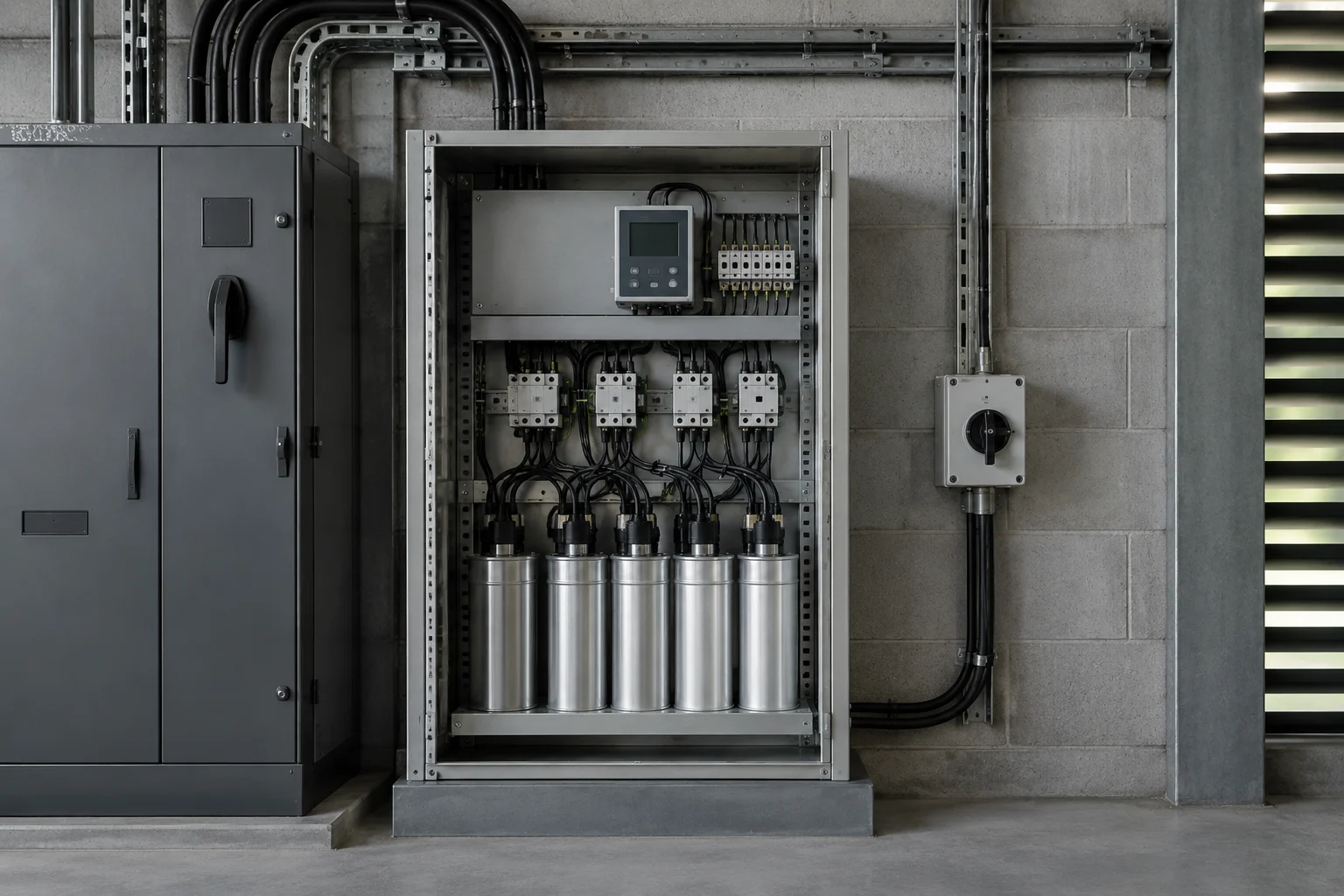
Overview
Describe the issue driving correction work and the operational outcome required. Identify the premises, affected teams and changed equipment use, ensuring investigation follows current site conditions rather than relying on assumptions from an earlier electrical arrangement.
Our full service catalogue, including every individual service, is available across every listed sector and location. For one site or several, we agree the scope, access and programme around the buildings concerned.

What the service can include
The correction brief brings together load data, measurements, existing equipment and the proposed approach. It specifies switching, protection, positioning and upkeep. Before choosing a capacitor arrangement, assess compatibility and the harmonic conditions within the installation.
What to consider
Power factor relates useful power to apparent demand. Correcting it may alter reactive demand without reducing the useful energy needed by a process. Changing loads and harmonics affect equipment suitability, so selection requires an engineering assessment of the actual installation.
The correction proposal identifies our instruction and duties retained by the site or property team. Define related repairs and specialist activities separately, with responsibility for arranging work and the expected records clear to everyone involved.
Before we visit
Gather load profiles, electrical drawings, bills and existing correction-equipment records. Flag large motors, drives and recent alterations. Select measurement periods that reflect real operating conditions rather than an unrepresentative snapshot.
How we help
We confirm why correction is being considered and assess the installation. Findings establish whether work is warranted and the suitable equipment arrangement. Handover documents operating checks, maintenance and installed equipment while keeping the commercial assumptions available.
Where work covers multiple sites, reporting and escalation follow agreed consistent arrangements. Local contacts and operating requirements remain visible, with actions attributed to the relevant building or service area and an identified route for wider decisions.
What affects cost and timing
Price depends on the measurement exercise, required correction duty, harmonics and installation access. Alterations to electrical provision and ongoing maintenance may need separate scopes. Compare the tariff effect expected with total project cost rather than assuming a standard saving.
Identify operating hours, critical periods and the activities that cannot stop during the work. The programme and price should include the resulting phasing, additional access requirements and reports needed for operational management.
Sector applications
Plan correction work around the premises’ activities. In Retail, consider deliveries and trading; in Offices, coordinate with visitors and staff. Hospitality brings food operations and guest areas into planning, while education requires access around teaching. Our full service and project offering covers all sectors with arrangements suited to actual site use.
Local coverage
Our area for correction work takes in Northumberland, Tyne and Wear, County Durham and Tees Valley. This includes Berwick-upon-Tweed, Alnwick, Morpeth, Hexham, Newcastle, Gateshead, Sunderland, Durham, Darlington, Hartlepool, Stockton-on-Tees and Middlesbrough; see View all locations for the complete geographical coverage.
For correction work at several sites, retain each address’s contact and restrictions on working. A common service instruction should make the differences between premises clear.
Frequently asked questions
Does correction always reduce energy consumption?
No. Correction primarily addresses power factor and reactive demand; it does not reduce every kind of electricity consumption.
Can capacitors be added without measurement?
Measure and assess the load and power-quality conditions before selecting capacitors.
Should existing correction equipment be maintained?
Yes. Put correction equipment within the appropriate care programme; continuing effectiveness should not be assumed.
Can a changed production line affect correction?
Yes. Significant changes to production warrant another review of loads and power quality.
Knowledge and guidance
For the context of correction work, consult Official guidance. Related information is available in planning an energy improvement project and building management systems explained; browse the Knowledge Centre for further background.
Related services and your next step
Related work includes Metering and Monitoring, within the broader Energy and Renewable Technologies offering. For care and smaller works, consult maintenance and Minor Works. The complete directories for services and projects provide the wider context.
Outline the sites, operating requirement and existing evidence when you Contact Black & White Facilities about correction work. Include the desired result and working constraints so we can establish the instruction and next action.
Discuss the scope
Tell us what needs attention.
Share the site, the issue and any access requirements so we can discuss the next step.