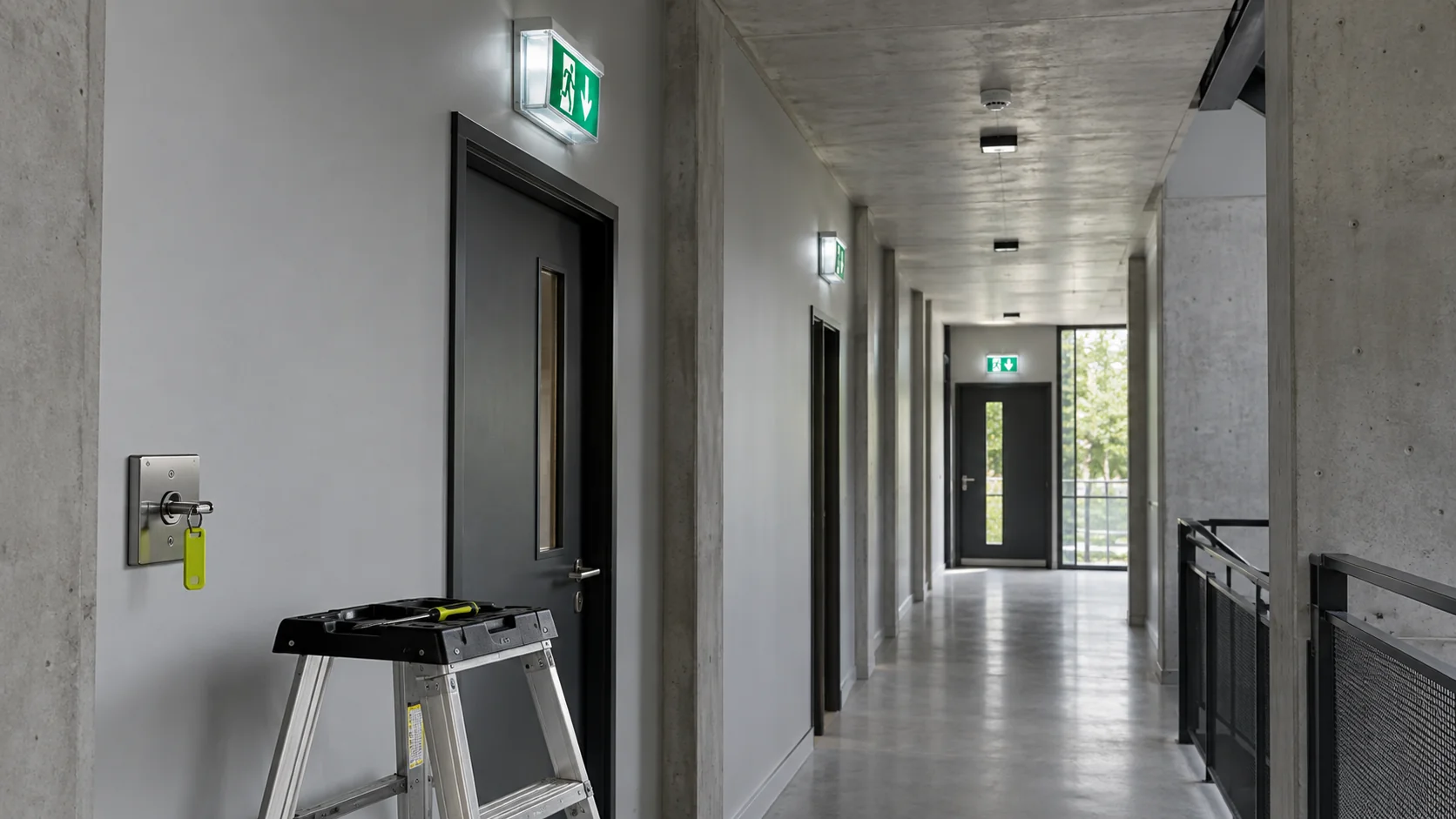
Duration testing draws on battery capacity while checking operation for the rated emergency period. Plan the subsequent recharge. Depending on the installation, the programme also needs indicator checks, visual observations and review of automatic test records.
Retain each type of check for its purpose. Initial operation does not establish endurance, while an automated pass cannot confirm that changed layouts have left signs visible and fittings unobstructed.
For a site-specific inspection, test or repair enquiry, see emergency lighting.
Establish the premises schedule
Identify luminaires, battery arrangements, testing facilities and commissioning records. Distinguish self-contained fittings from central supply systems so instructions match the equipment rather than a generic lighting list.
Have the competent maintainer document frequencies, duration, their basis and task ownership. The government offices and shops fire guide places emergency lighting within the wider assessment; select guidance matching the actual premises type.
Reassess after layout changes, alterations or repeat failures. New partitions or relocated exits may change the lighting requirement even when existing testing entries remain unchanged.
Plan testing around building use
Schedule discharge tests with enough recovery time before emergency lighting is relied upon again. Consider shifts, evening use, sleeping occupancy and windowless areas. Agree interim operating arrangements before testing, rather than addressing occupancy conflicts after batteries are depleted.
Use competent personnel and suitable controls for testing and electrical investigation. Users should report damage or failures without opening fittings or disconnecting wiring to improvise a check.
Keep a record that leads to repair
Record date, equipment reference, check type, relevant duration, result and operative. Link failures to an owner, remedial action and closure evidence. Agree and record temporary fire-safety arrangements through the responsible person while defects remain.
Frequently asked questions
Is a brief test enough to check battery capacity?
No. The functional check establishes initial operation; the duration check assesses continued operation for the specified period.
Do automatic tests remove all manual checks?
No. Review and act on automatic results. Visibility, physical condition and changes around the equipment still need attention.
What should happen after a failed test?
Identify the failed fitting, notify the responsible person and arrange competent assessment and repair. Address the implications for escape arrangements during the defect period.
Related help
Explore emergency lighting provision, statutory maintenance programmes and the building guidance library.