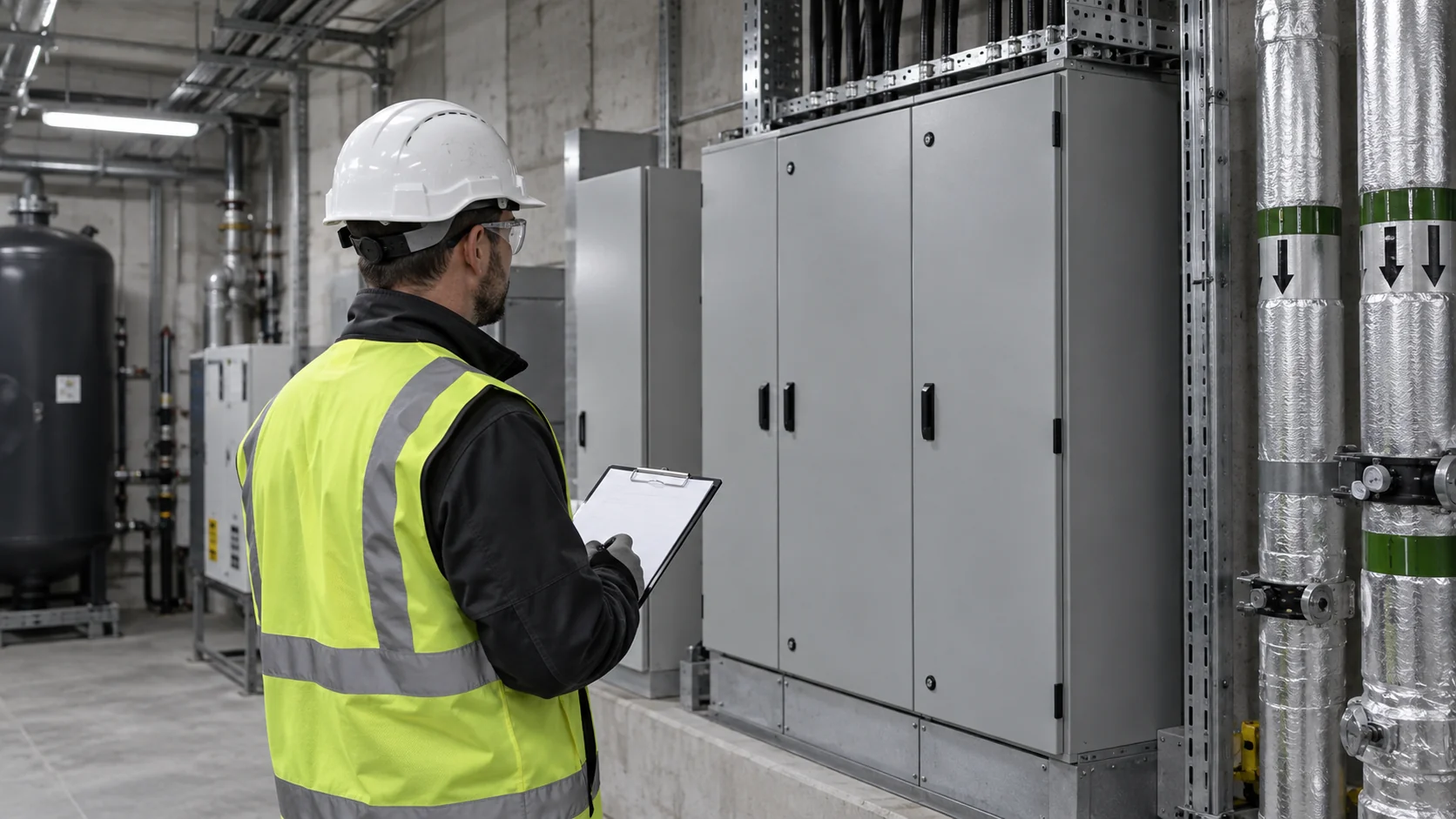
Provide equipment identities and visible labels only where safely accessible. Do not enter restricted electrical areas or remove covers for information. Repeated resets or attempts to recreate the fault cannot replace competent investigation.
For investigation of a reported fault and an agreed repair, explore commercial electrical repairs.
Different protective devices respond to different conditions
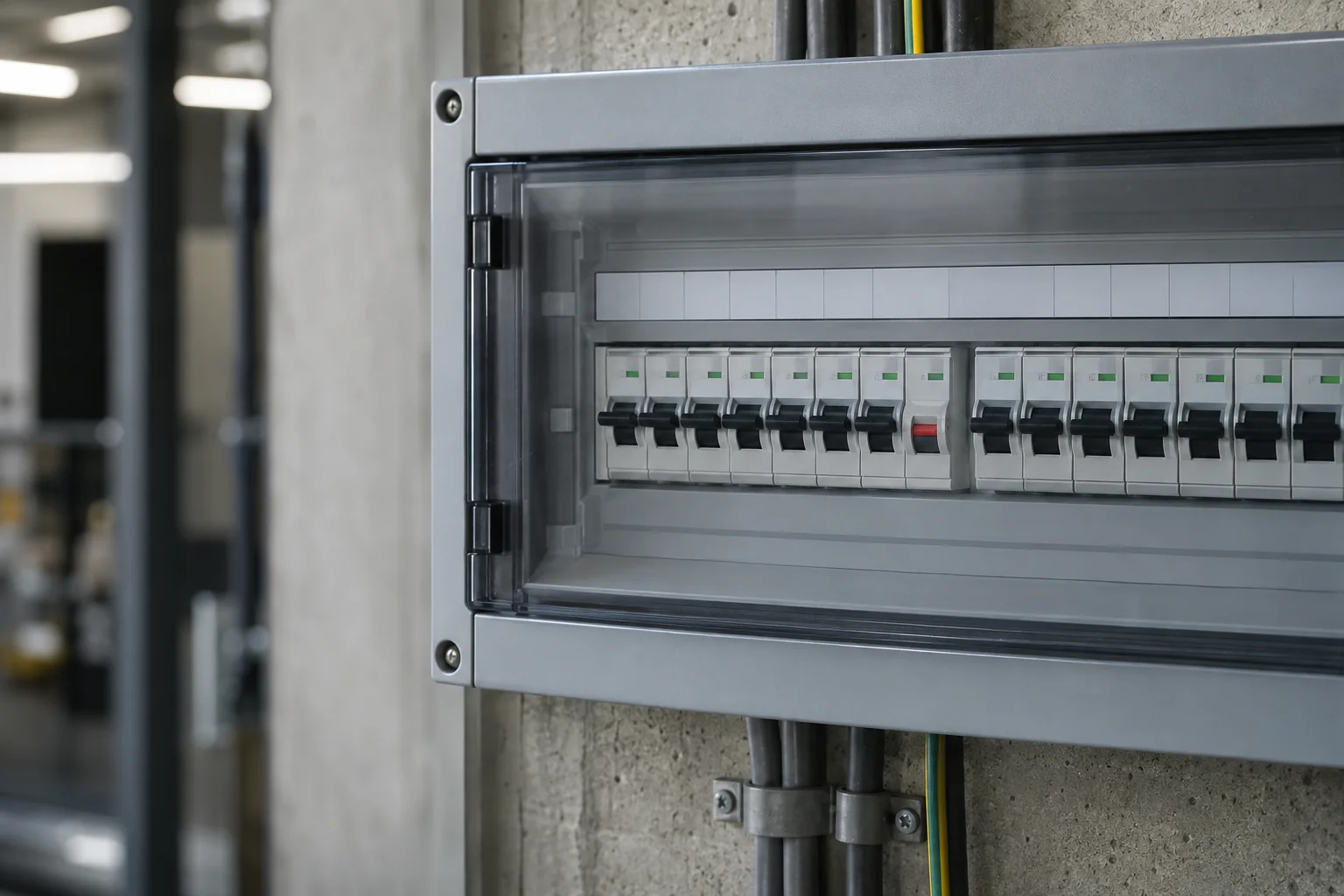
Overcurrent devices respond to conditions such as excessive load or short circuits. Residual-current devices detect imbalance associated with current taking an unintended path; some devices combine these functions. Schneider Electric describes RCD and RCBO differences.
Establish which protection operated. A report of recurring power loss can describe several different events. The competent electrician needs installation information and suitable checks to determine the investigation route and cause.
Look at timing and connected changes
Compare incidents with equipment startup, rainfall and peak operating demand. These suggest different lines of enquiry; recorded timing and site conditions are especially useful when symptoms are intermittent.
Include recent installation, servicing and new equipment in the history without assuming they caused the fault. Assess that evidence alongside the existing electrical arrangement.
Keep the investigation and repair distinct
Use the initial attendance to establish the reported event, installation affected and relevant findings. Specify repair from the diagnosed cause. Changing a protective device without explaining its operation can leave the defect unresolved.
Record tests, observations, action and the operating state left. Where the event cannot be reproduced, agree further evidence or investigation; failure to reproduce it does not disprove the original report.
Respond to dangerous symptoms
Restrict approach to damaged electrical equipment and escalate promptly. Smoke, fire or immediate danger to life needs emergency services. Water-affected equipment requires competent control and assessment; people should neither approach nor handle it.
Electrical work requires competent people and suitable arrangements. HSE maintenance guidance explains safe preparation and isolation before maintenance activity.
FAQs
Does a trip always mean a faulty appliance?
No. Demand, fixed wiring or connected equipment may be involved. Establish the affected part through investigation before choosing repairs.
What if the fault disappears before attendance?
Supply the incident history and operating conditions. The report should distinguish what the checks established from further evidence still needed.
What information helps the electrician?
Identify the site area, event time, operating equipment, changes and previous reports. Include images only if obtaining them is safe.
Related help
Explore electrical repair provision and diagnostic work. Read handling an unconfirmed fault, or submit the incident details.