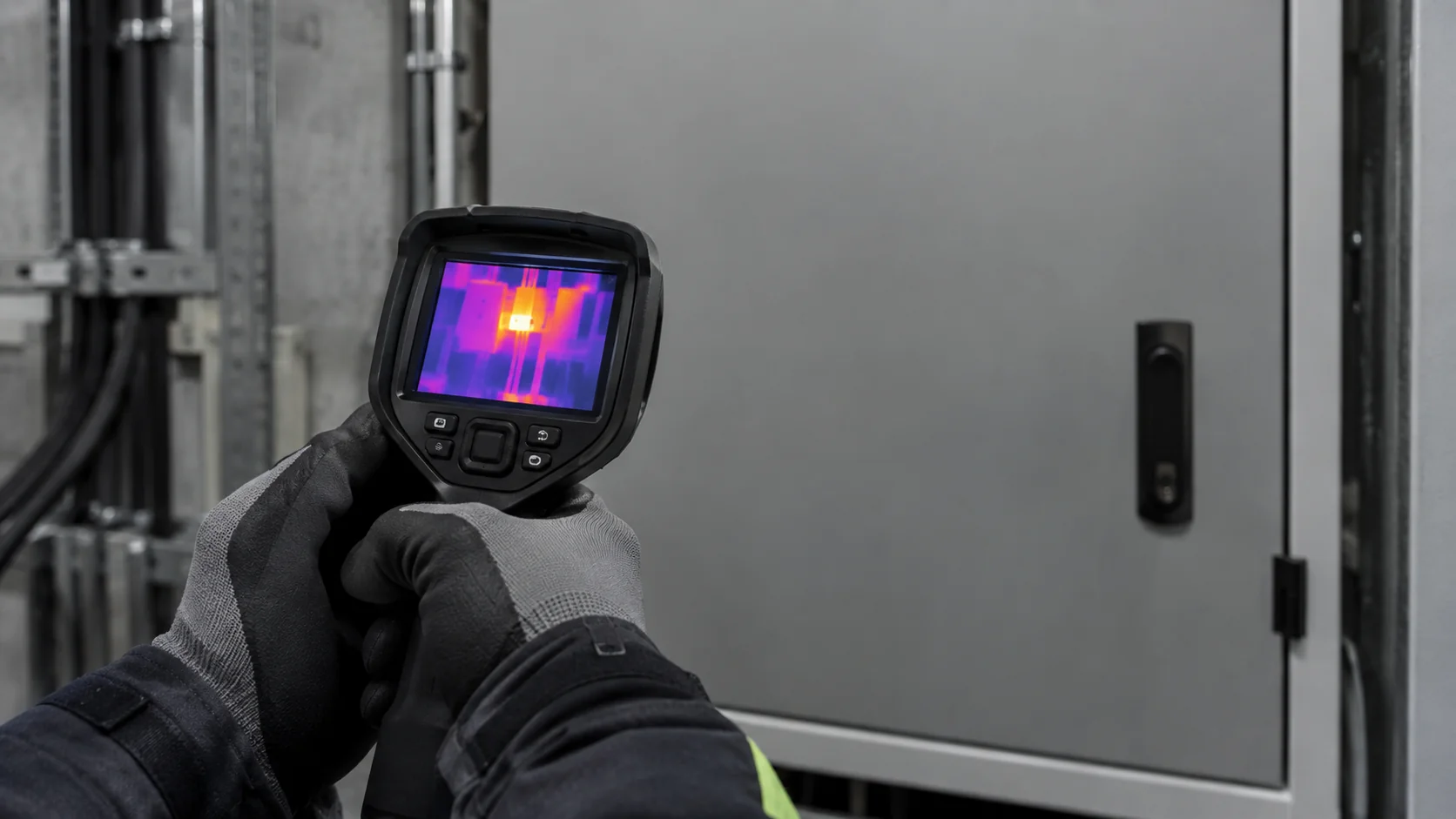
A connection warmer than others merits assessment, but comparison must consider their respective loads. Turn the observation into a reasoned investigation requirement rather than an automatic equipment-replacement instruction.
Fluke describes the limits of viewing through cabinets and solid metal containment. Access, viewing angle and visible surfaces determine coverage. Surface properties and reflections can affect readings. Record inaccessible components as limitations, not implicitly satisfactory findings.
Prepare for a useful survey
Provide asset and circuit schedules, previous thermography reports and operational patterns. Define whether the commission addresses a symptom, creates baseline information or contributes to a planned programme.
Agree equipment operating states and how loads will be captured. Low activity may conceal the conditions of a recurrent issue. Schedule around production cycles or intermittent operation where relevant to the survey purpose.
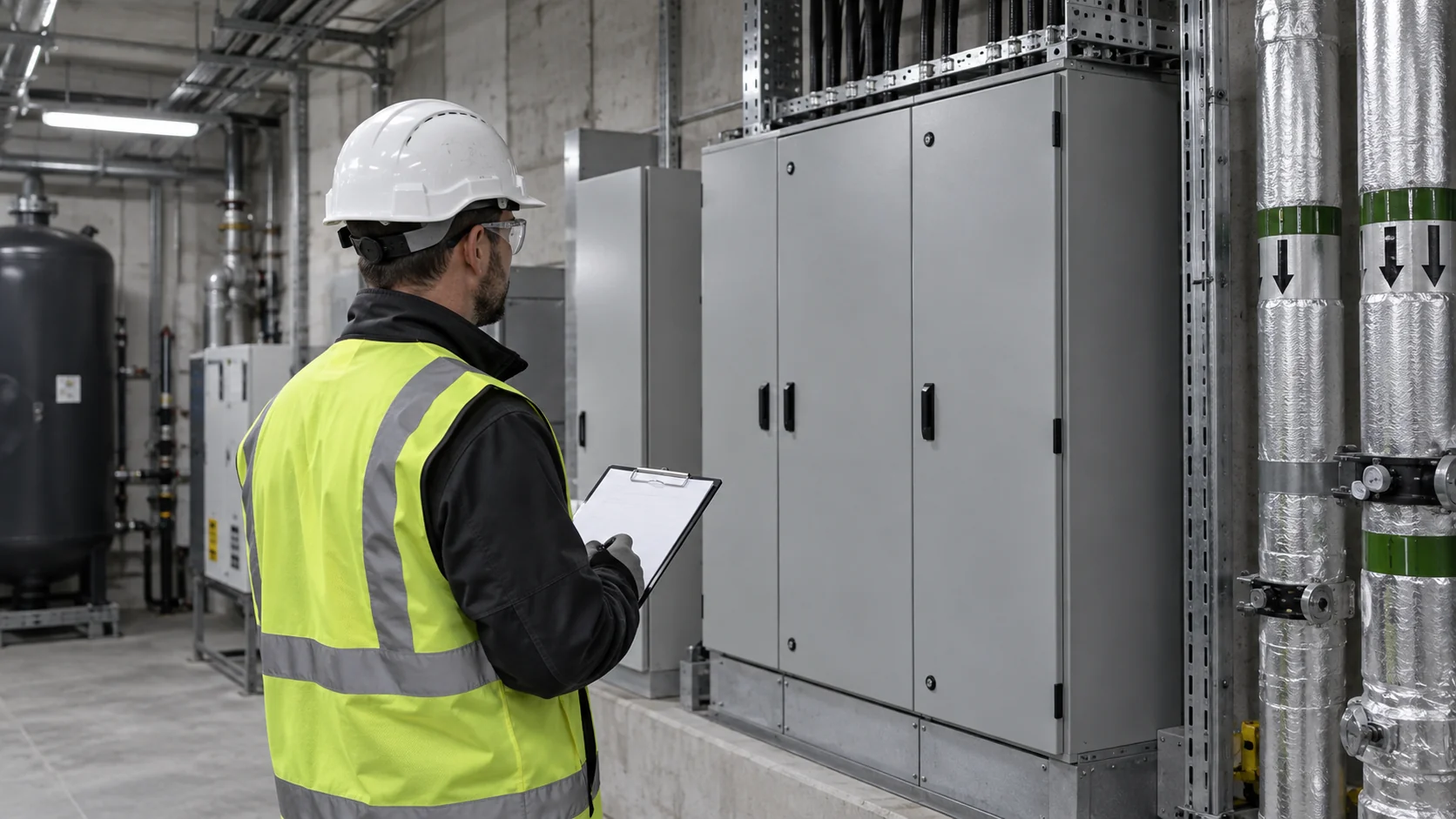
Competent people must plan electrical access. Removing covers can expose serious danger; site users should not open equipment to help the survey. Apply the risk-management principles in HSE electrical guidance.
Turn images into actions
Require asset references, thermograms, useful ordinary photographs, operating context, observations and recommendations. Distinguish immediate concerns from planned investigations and identify equipment outside the assessable scope.
Allocate findings and retain investigation results. After repair, a suitable comparison under relevant load can help judge whether abnormal heating has resolved. Keep the intervention evidence with the source finding for future asset reviews.
Frequently asked questions
Does thermal imaging replace an EICR?
No. Thermal information relates to survey conditions. An EICR has a different inspection and testing remit; use the evidence together where relevant, without treating them as interchangeable.
Does a hot spot prove a loose connection?
No. Temperature can reflect loading, component behaviour, ventilation or other conditions. Establish the cause before specifying corrective work.
Can a survey find every electrical defect?
No. Defects may produce no visible temperature contrast, while limited access and low loading restrict detection. Reports must state coverage and operating conditions.
Related help
Explore thermal imaging surveys, diagnostic maintenance and planned programmes, or browse technical guidance.