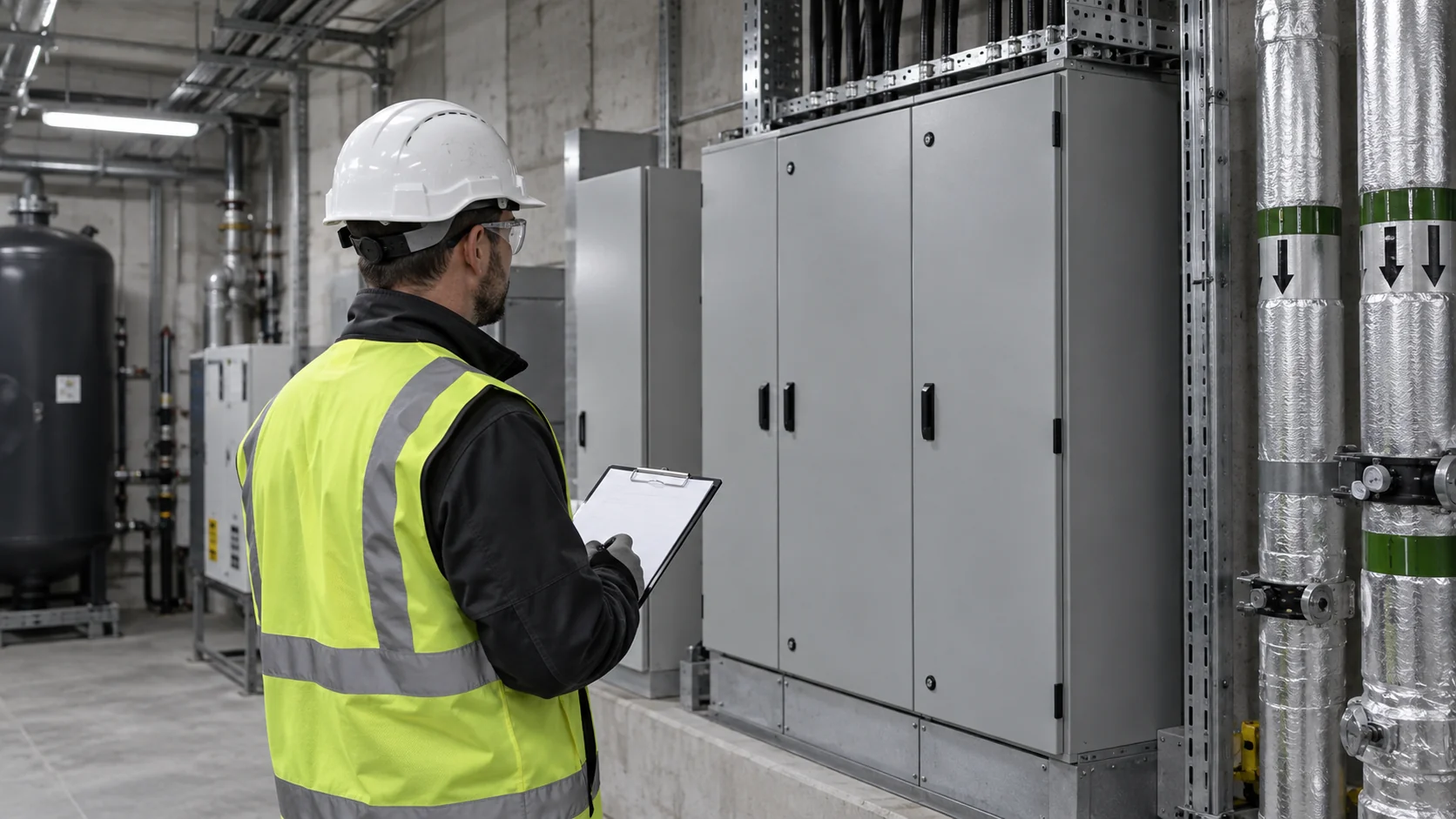
Escalate burning odours, damage and abnormal behaviour through site safety procedures. Do not touch suspect equipment, remove covers or repeatedly reset protection. HSE electrical-safety guidance addresses risk control and the need for competent work.
Spare ways do not prove capacity for additional circuits: assess supply, load, protective design and compatibility. Conversely, a board without spare positions does not alone justify renewal of the entire installation.
Compare repair and replacement properly
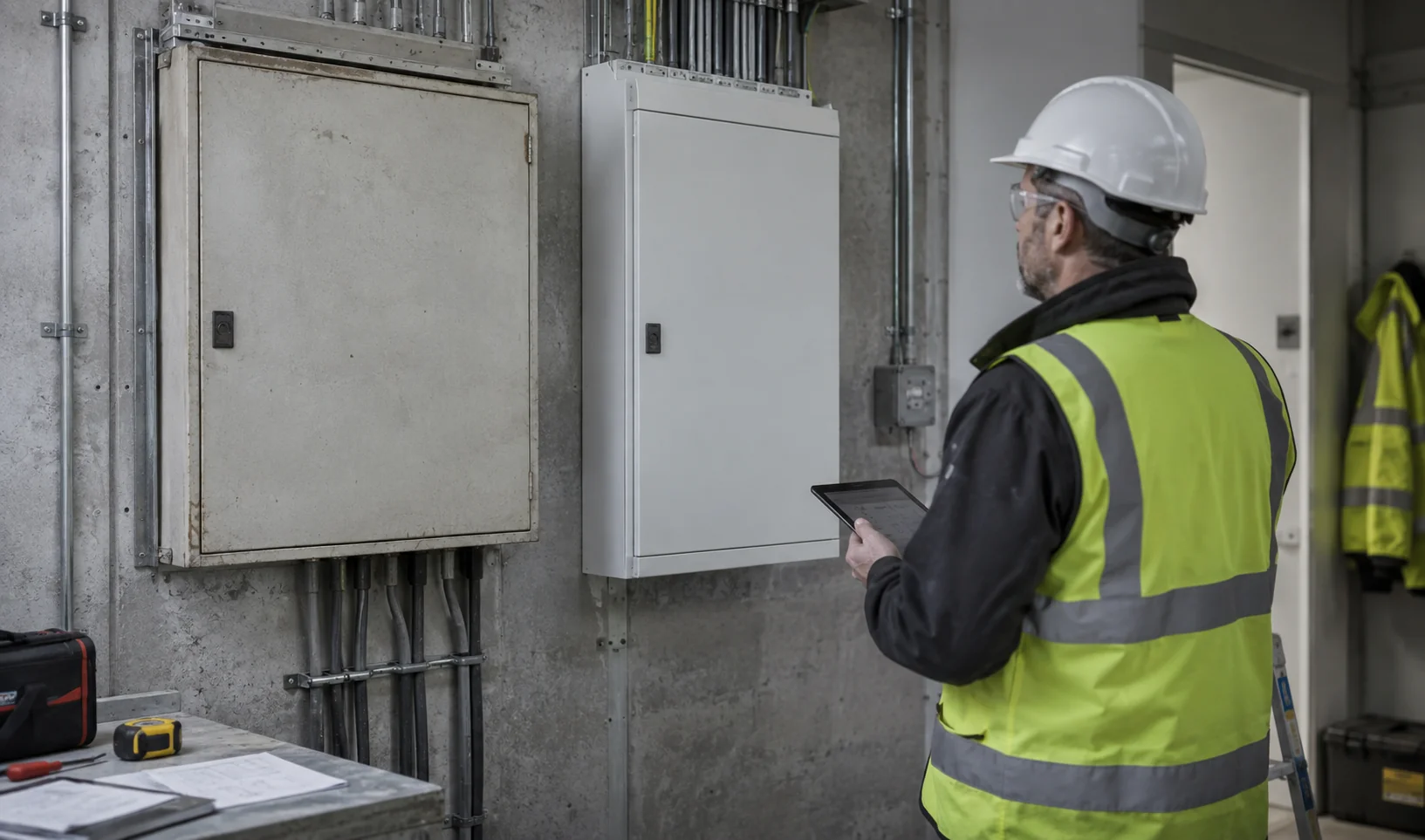
Require an explicit defect assessment and options. Repair proposals should identify the suitable component, cause addressed and verification. Renewal proposals need the required capacity, circuit configuration and associated installation work.
Consider continued maintainability, not only the initial equipment cost. Parts support, recurrent defects, planned additions and disruption from later work all inform the recommendation. Retain that assessment with the decision.
A local component defect in an otherwise appropriate installation may favour repair. Multiple unsuitable changes with planned load additions may support coordinated renewal. Select the response from actual findings rather than general replacement rules.
Prepare for the shutdown
Identify every supplied service, essential load, shared occupier and controlled shutdown or restart. Agree outage duration, working access and responsibility for notifying affected site users.
Allow for investigation of retained circuits. Testing can reveal faults needing correction before restoration. Establish reporting and approval arrangements, with an operational contingency where circuits cannot be returned safely during the planned window.
Treat temporary power as a separately designed and controlled supply. Define loads, connection arrangements and removal in advance instead of creating an improvised installation during the outage.
Specify the handover
Obtain accurate circuit schedules, relevant inspection and test records, equipment information and outstanding actions. Record which circuits changed and retain the package with electrical documentation. Clear identification supports maintenance and reduces uncertainty at future shutdowns.
Frequently asked questions
Is there a fixed age when every board must be replaced?
No. Age may influence component availability, but condition, suitability and assessment determine scope. There is no universal replacement age established here.
Will replacement stop repeated tripping?
Only where replacement addresses the diagnosed cause. Problems in downstream circuits or connected equipment require their own investigation.
Can replacement be priced from a photograph?
An image helps initial discussion but cannot establish the whole instruction. Assess circuits, installation, working access, outage arrangements and required testing.
Related help
Review electrical provision, diagnostic maintenance, planned renewal and the technical guidance library.