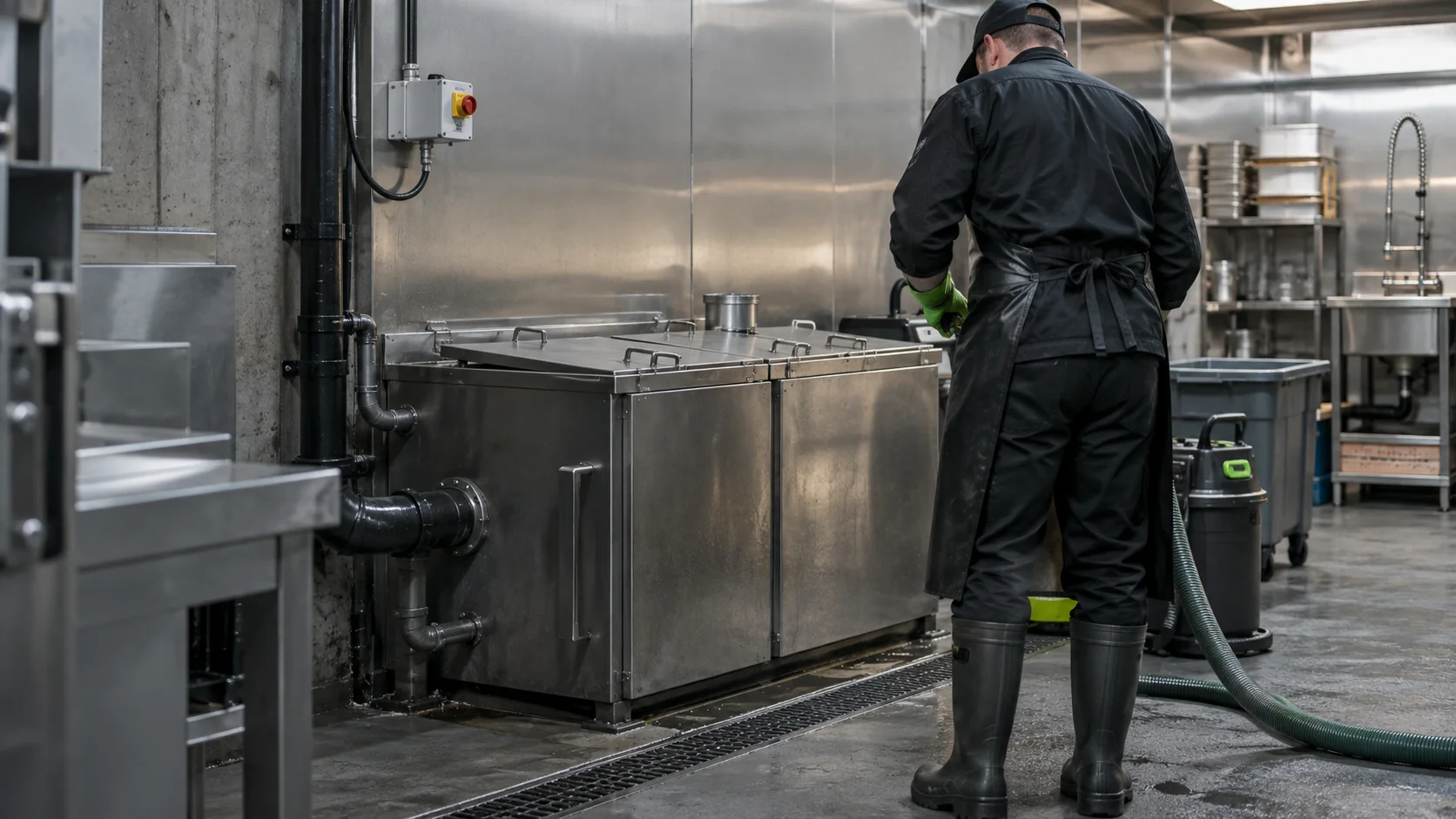
Allocate routine checks, cleaning arrangements and record ownership. Kitchen staff need a reporting route for smells, slow drainage or visible faults without undertaking unfamiliar maintenance themselves.
Northumbrian Water’s grease trap guidance covers regular inspection, cleaning according to manufacturer requirements and appropriate disposal. Apply these principles to the equipment actually installed and its maintenance instructions.
Learn from actual accumulation
Use accumulation evidence to establish the schedule. Review it during initial operation and after significant changes instead of importing another kitchen’s cleaning interval.
Require a consistent attendance record covering:
- Date, unit reference and inspected location.
- Observed deposits and evidence of reduced performance.
- Cleaning or emptying undertaken and the person completing it.
- Defects, access limitations and components needing attention.
- Waste documentation and the next planned activity.
If loading approaches the operating limit before the next visit, shorten the interval and review its source. Poor performance immediately after cleaning needs assessment of installation, connected appliances and downstream drainage, not another identical clean by default.
Reduce what reaches the trap
Reduce grease at source. Keep food solids and waste oil out of sinks and provide suitable collection. Include preparation, washing-up and closing routines in the kitchen’s waste-management arrangements.
A trap does not authorise disposal of oil through drains. Include disposal practices in induction and make containers usable and convenient. Review them after staffing or menu changes.
Assess chemical dosing against the installed equipment’s instructions and overall grease-management plan. Do not treat treatment as an automatic replacement for required cleaning.
Plan access and waste handling
Plan access, safe handling, kitchen restrictions and disposal before the work. Allow enough time for the complete process, then ensure lids are secure and the area can return to normal use.
Keep contractor waste-collection documents with maintenance evidence. They preserve a traceable history during changes of tenant, kitchen manager or managing agent.
Frequently asked questions
Is monthly cleaning always enough?
Not necessarily. Establish timing from the manufacturer’s instructions, actual loading and inspection history, then review it as those conditions change.
Why is the drain still slow after the trap is cleaned?
A downstream restriction or defect in the trap arrangement may remain. Record the completed clean and investigate the continuing drainage complaint.
Should a quiet kitchen stop maintaining its trap?
No. Reassess the programme for reduced use and equipment instructions. Lower demand does not eliminate the need to establish condition and performance.
Related guidance and services
Read recurring drain blockages. Coordinate Grease Traps and Interceptors, Drain Cleaning and Maintenance and Planned Preventative Maintenance as the findings require.
Review services, maintenance, projects, sectors, locations and the knowledge centre, or discuss kitchen drainage with the trap details and cleaning history.