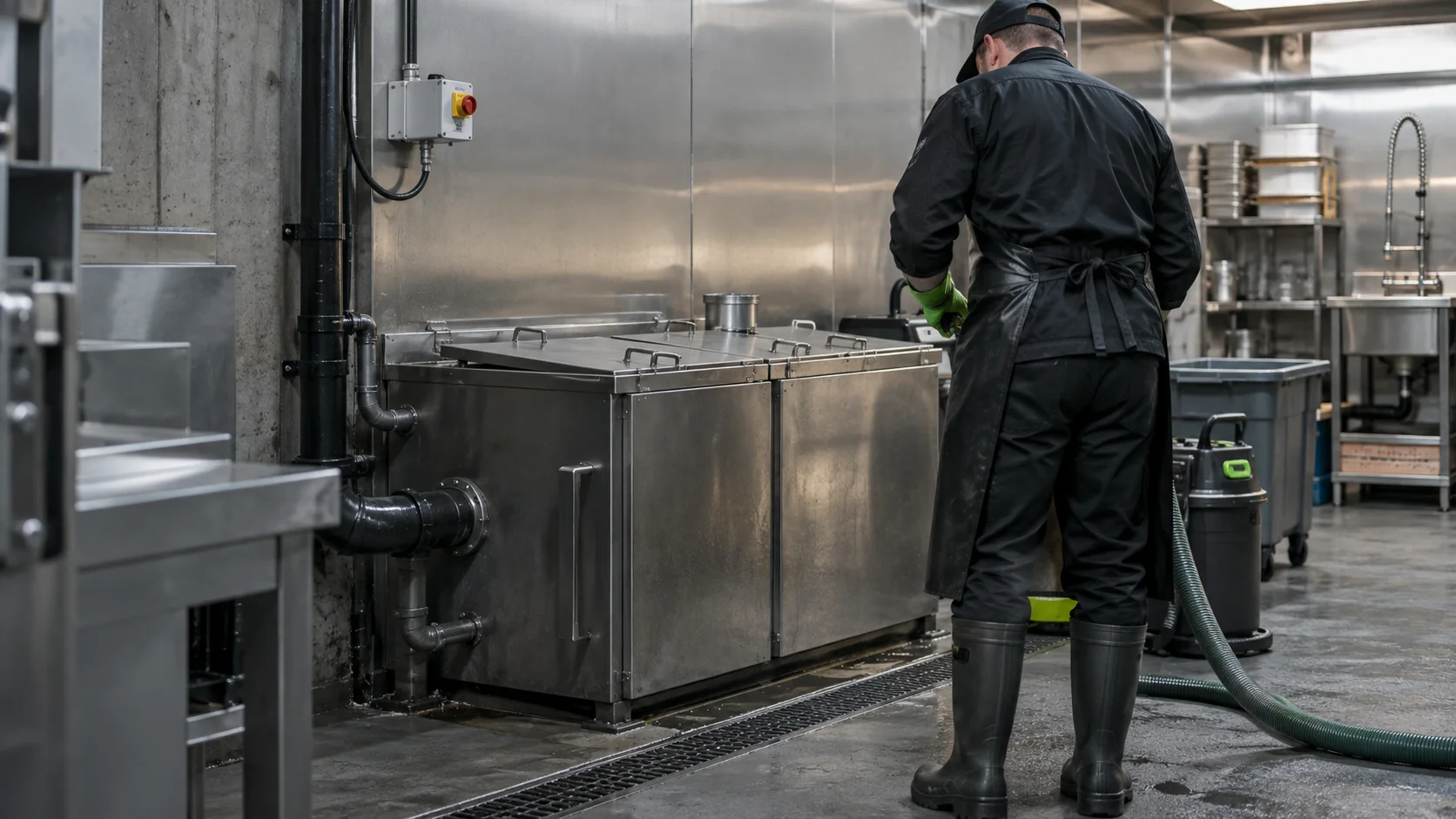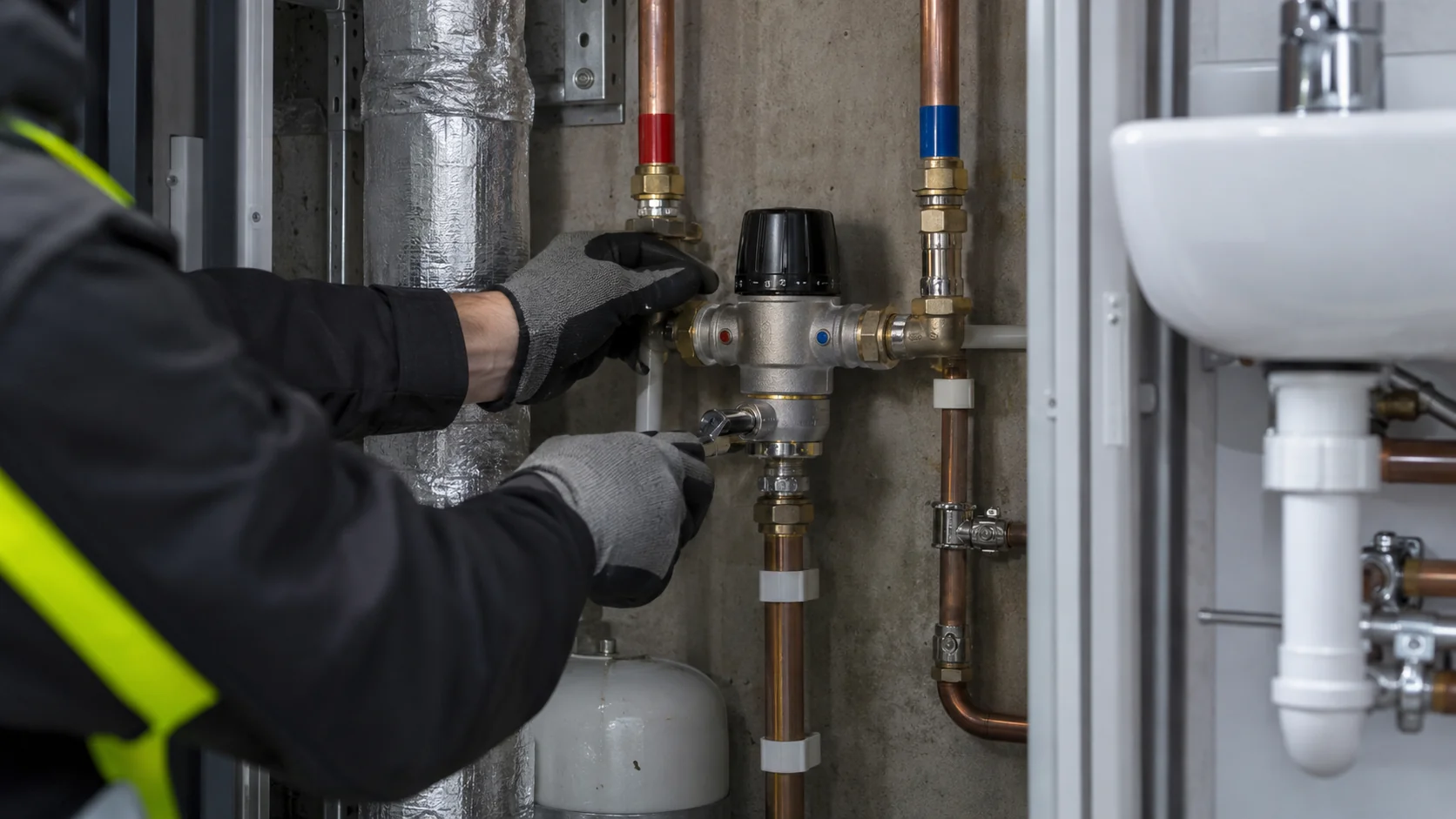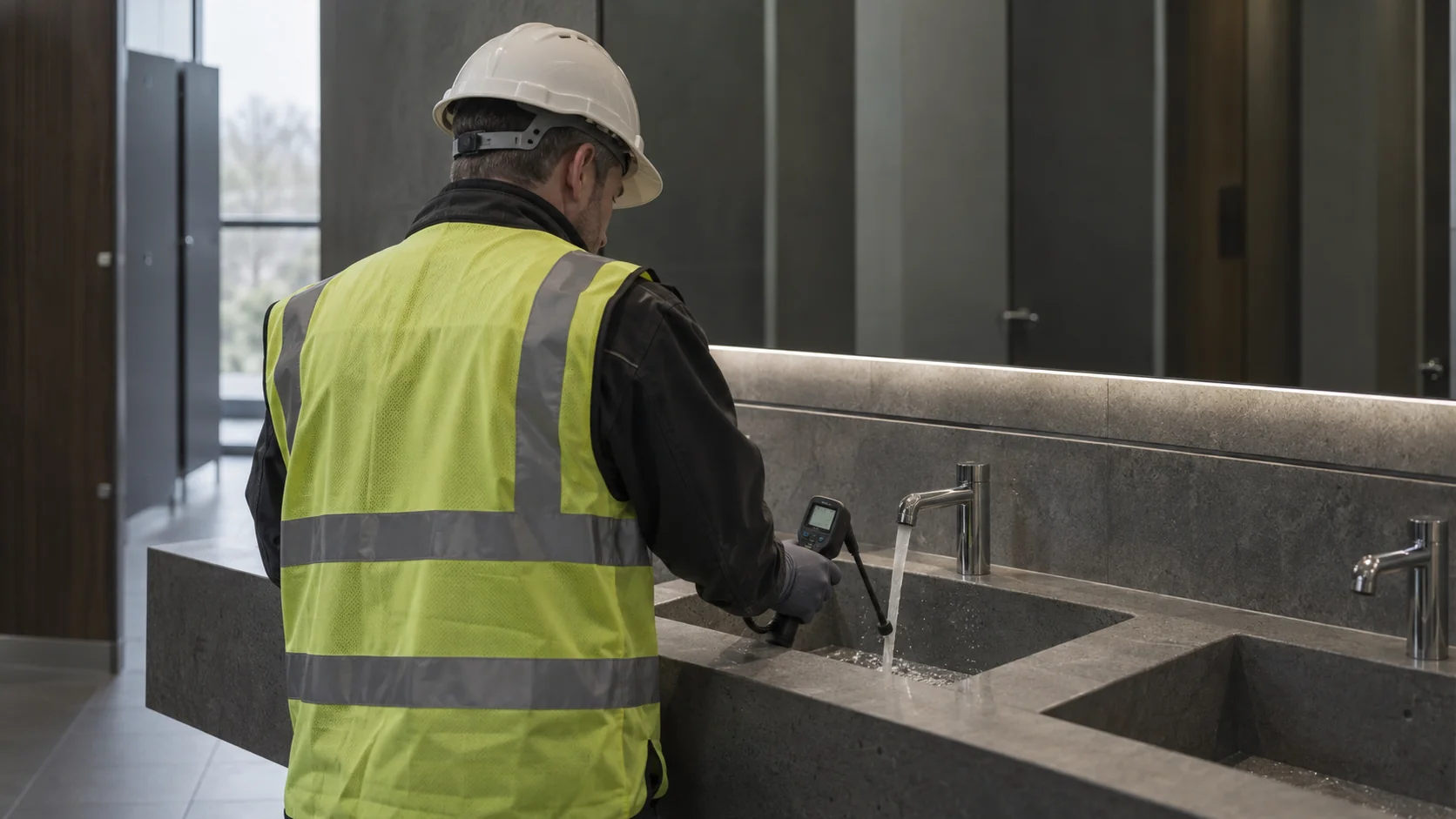

Require the assessment to establish:
- Systems covered, operating use and inspection limitations.
- Potential exposure sources and people at risk.
- Existing controls and evidence of their effectiveness.
- Responsibility for managing systems and performing checks.
- Gaps, recommended actions and review arrangements.
identifying and assessing sources of risk explains the assessment requirement. Match competence to the installation’s complexity; experience with one system type does not establish suitability for every premises.
Does it include cooling towers?
Specify included systems expressly. Hot and cold water, evaporative cooling and other installations have different operating conditions and need appropriate technical knowledge.
For cooling towers, cover the wider evaporative system, associated plant and water management. Mechanical servicing of fans or pumps cannot replace the risk assessment. A chiller alone also does not prove a tower is present: verify the heat-rejection arrangement.
Consult HSE's cooling tower guidance for the control considerations particular to evaporative cooling systems.
What should you prepare and do afterwards?
Provide schematics, previous assessments, operating data, maintenance and monitoring evidence, alterations and relevant access. Clarify system control and ownership where landlord and occupier responsibilities meet.
Convert findings into prioritised, owned actions with closure evidence. Link any required control scheme to the assessment and delivery responsibilities. Preserve the reasoning behind controls through contractor and management changes.
Review regularly and after changes or evidence questioning validity, including altered pipes, occupancy, prolonged disuse or ineffective controls. HSE's review guidance supports reviewing system description, responsibility and monitoring together.
Frequently asked questions
Is a water test the same as a risk assessment?
No. A sample describes water at a particular time and place, whereas assessment considers the risk-management arrangement. Include sampling requirements and response to results in system controls; consult HSE's testing and monitoring guidance.
Must every assessment be replaced annually?
No universal annual replacement rule applies to all systems. Set risk-appropriate review arrangements and respond earlier to relevant changes. Review establishes what remains suitable and what needs updating.
Does appointing a contractor transfer responsibility?
No. The dutyholder retains responsibility when assistance is appointed. Define contractor scope, access, reporting and escalation, and who authorises and closes remedial actions.
Related services
Coordinate Legionella Risk Assessments, Water Hygiene and Legionella and Chillers and Cooling Towers where applicable. Review maintenance and the Knowledge Centre, or discuss your building's requirements with system information.
Further routes include all services, maintenance, projects, sectors, locations and the knowledge centre.