
Black & White Facilities / Service brief
Flood and Sewage Cleaning
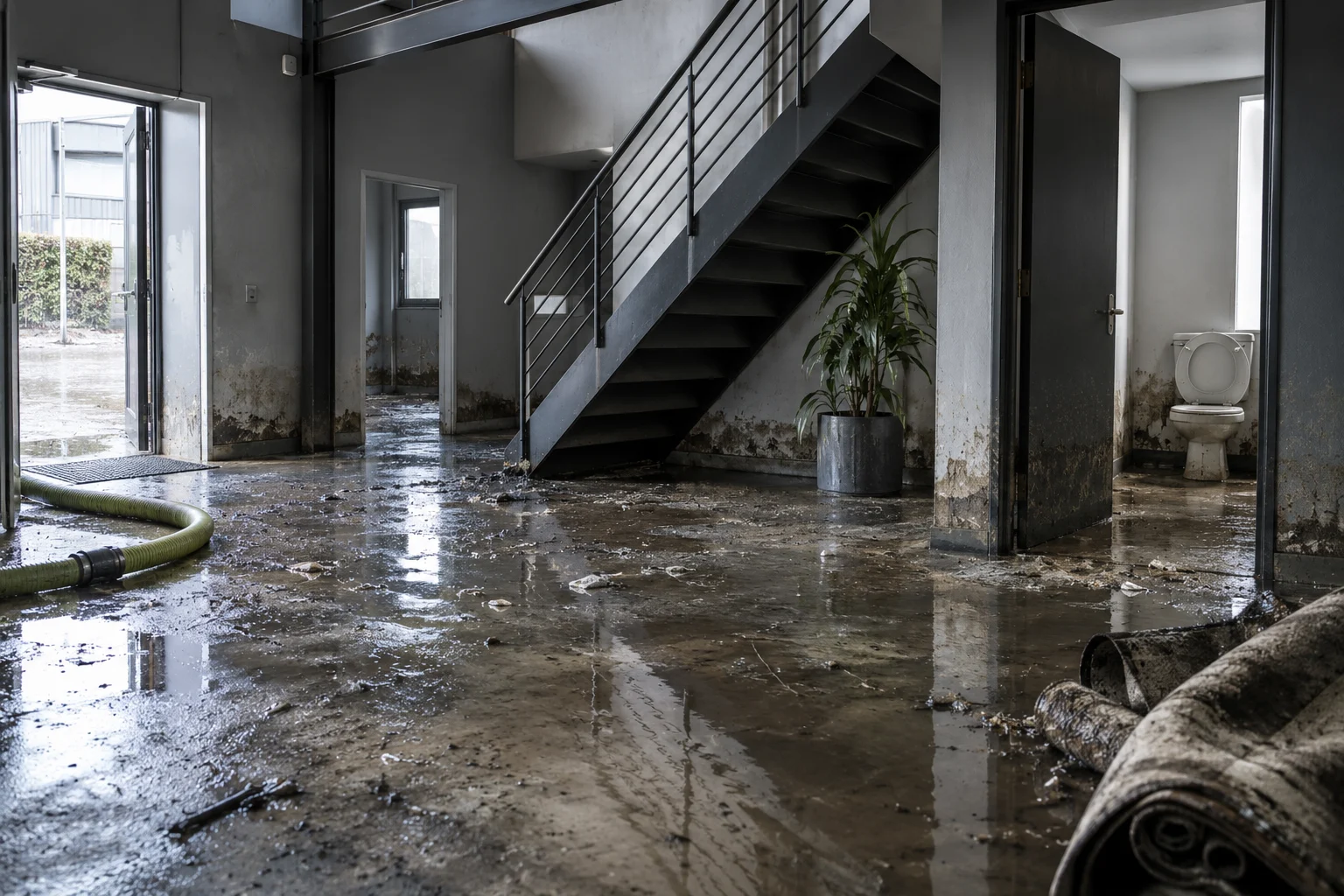
Water and sewage leave more behind than what is visible: contaminated deposits, saturated porous materials and moisture held in the building fabric. The area has to be assessed before it is returned to use, and cleaning has to be sequenced with drying and repair. Describe where the water came from, when it started and which rooms it reached.
What the work can include
- Review of the contamination present.
- Removal and cleaning to the agreed scope.
- Sequencing with drying, waste disposal and reinstatement.
The scope in writing states the areas included, what is retained and the completion information expected; across several sites, a site and location reference on each item keeps cost and follow-up traceable.
Our full service catalogue, including every individual service, is available across every listed sector and location. For one site or several, we agree the scope, access and programme around the buildings concerned.
Important decisions
Find out where the water came from and whether it is still coming in. Cleaning, drying and building repair are three separate steps that need coordinating rather than treating as one. On a managed site this is a specialist task with its own scope and reporting, distinct from routine cleaning and planned around the building's operational priorities.
Before we visit
State the source and timing of the ingress, the rooms affected, the materials involved and whether services have been isolated, with relevant site records, the effect on the operation and the limit of local approval. Say who the on-site contact is and when work can proceed without halting critical activity.
How the work proceeds
The enquiry captures the outcome required and whatever is already documented about the event. An assessment then reviews the contamination and defines how far the instruction can go. Before work begins, the agreed scope fixes method, order of work, protection and access.
At completion, work is recorded against the site and room reference, the result noted and any outstanding action listed apart from the completed instruction; later maintenance and budget decisions draw on that record.
What affects cost and timing
The water source, the contamination it carried, the materials affected, drying requirements and access are the main variables. They dictate the resource, order of work and time on site; a photograph or rough area alone cannot fix the scope.
For an event affecting several sites, compare equivalent tasks and access assumptions before combining them into one programme, and identify the interim arrangements the operation needs and the trigger for any additional work.
Applications across sectors
Office sites need the clean-up run around desks and meeting rooms that remain in use; schools and colleges need controlled access around occupied rooms; hospitality sites need food areas and service periods protected. Every sector served is listed under sectors.
Local coverage
Black & White Facilities operates throughout North East England, covering Northumberland, Tyne and Wear, County Durham and the Tees Valley. A property in Newcastle, Gateshead, Durham, Middlesbrough or another listed area should be identified by postcode, with access details; the full coverage appears in the location directory.
Frequently asked questions
Can the space reopen once the standing water is gone?
Not on its own. Contamination, moisture still held in the fabric and the condition of building materials all need checking before normal use resumes.
What information helps scope flood and sewage cleaning?
The source and timing of the ingress, the rooms affected, material details and any isolation already done. Add the result you need and any fixed dates. Any survey or report already produced saves the scope guessing at what has been checked.
What most affects the cost and programme?
Water source, contamination, affected materials, drying needs and access. The scope needs to spell out the preparation, access and completion work included, otherwise proposals cannot be compared fairly.
How should the completed work be recorded?
Against the site and work reference, with the areas treated or components changed and any remaining action. Limitations are recorded apart from finished work, so the record can be relied on.
Guides and useful reading
The cleaning and hygiene planning guidance explains the decisions behind the service. Where water damage puts a building element or asset in question, repair versus replacement sets out how to weigh condition, cost and disruption.
See the HSE cleaning pages for context on the wider working environment.
Related services and your enquiry
The whole cleaning and hygiene group is under Cleaning and Hygiene. Adjacent services are graffiti removal, gutter cleaning and high-level facade cleaning; for anything beyond this group, see all services, maintenance, projects, sectors and locations.
Contact Black & White Facilities giving the site reference, the priority for the operation, the authorised contact and the records available, plus the source and timing of the ingress, rooms affected, material details and any isolation information where you have them, so the next step is scoped around the actual site.
Discuss the scope
Tell us what needs attention.
Share the site, the issue and any access requirements so we can discuss the next step.