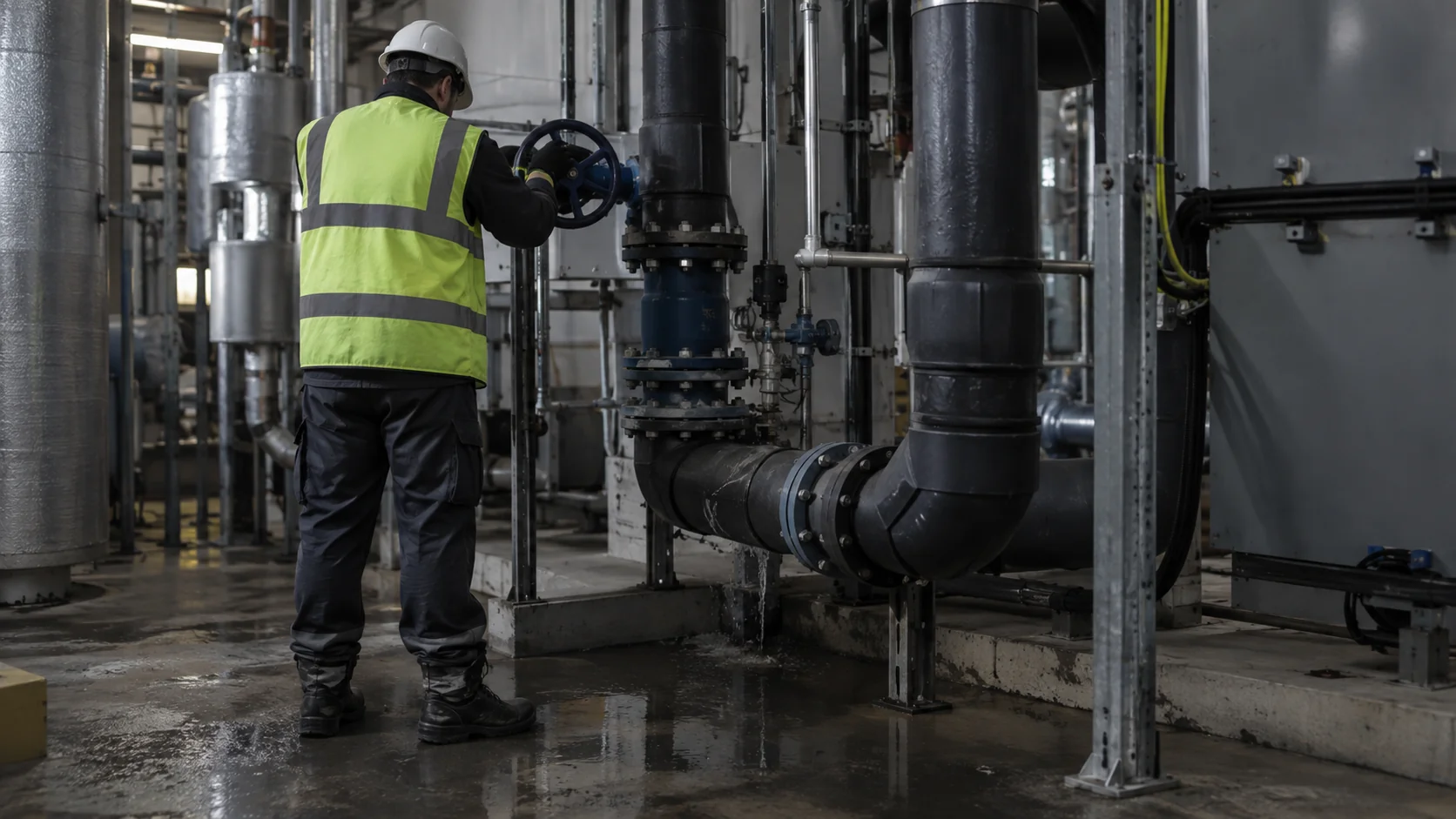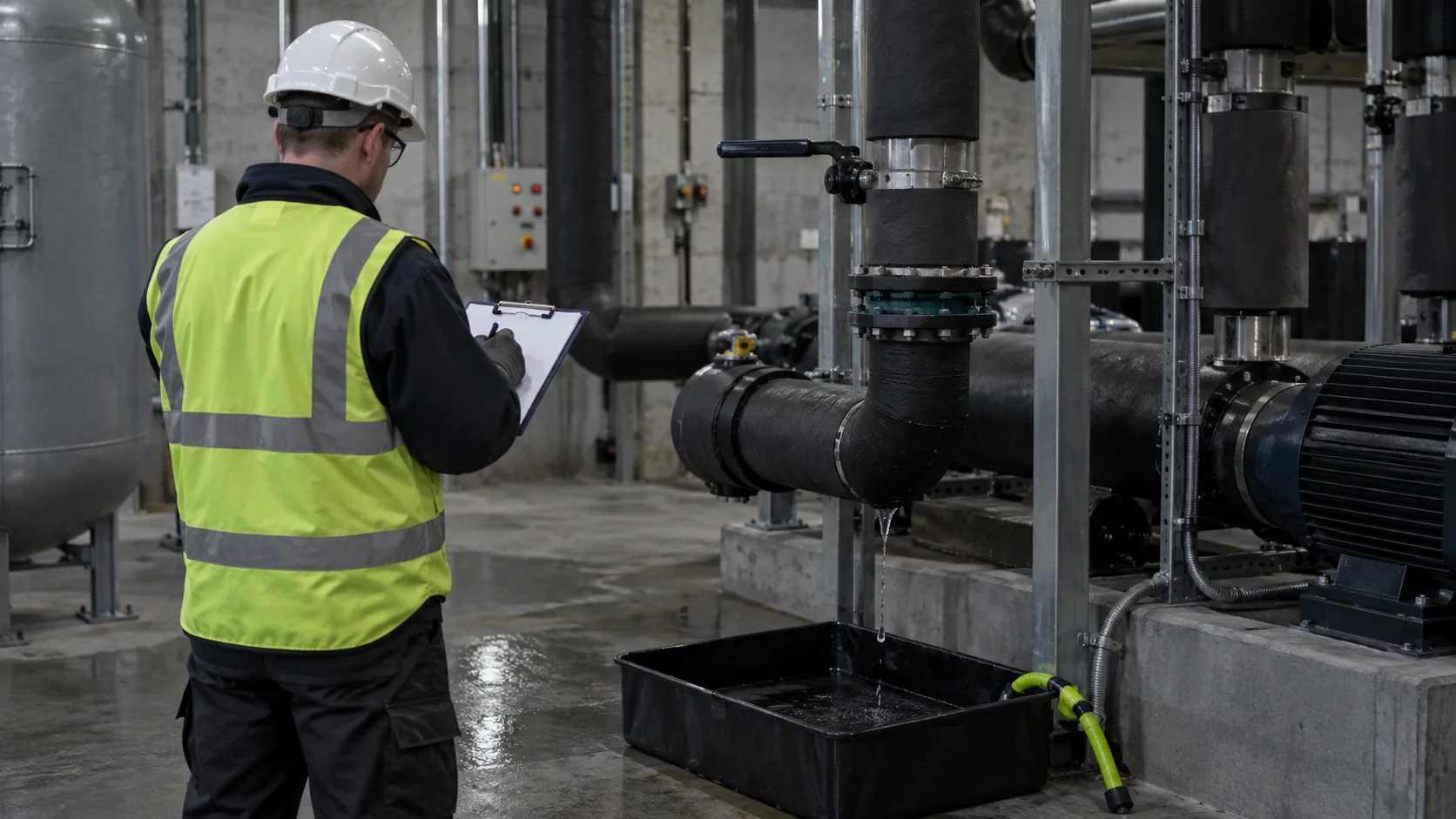
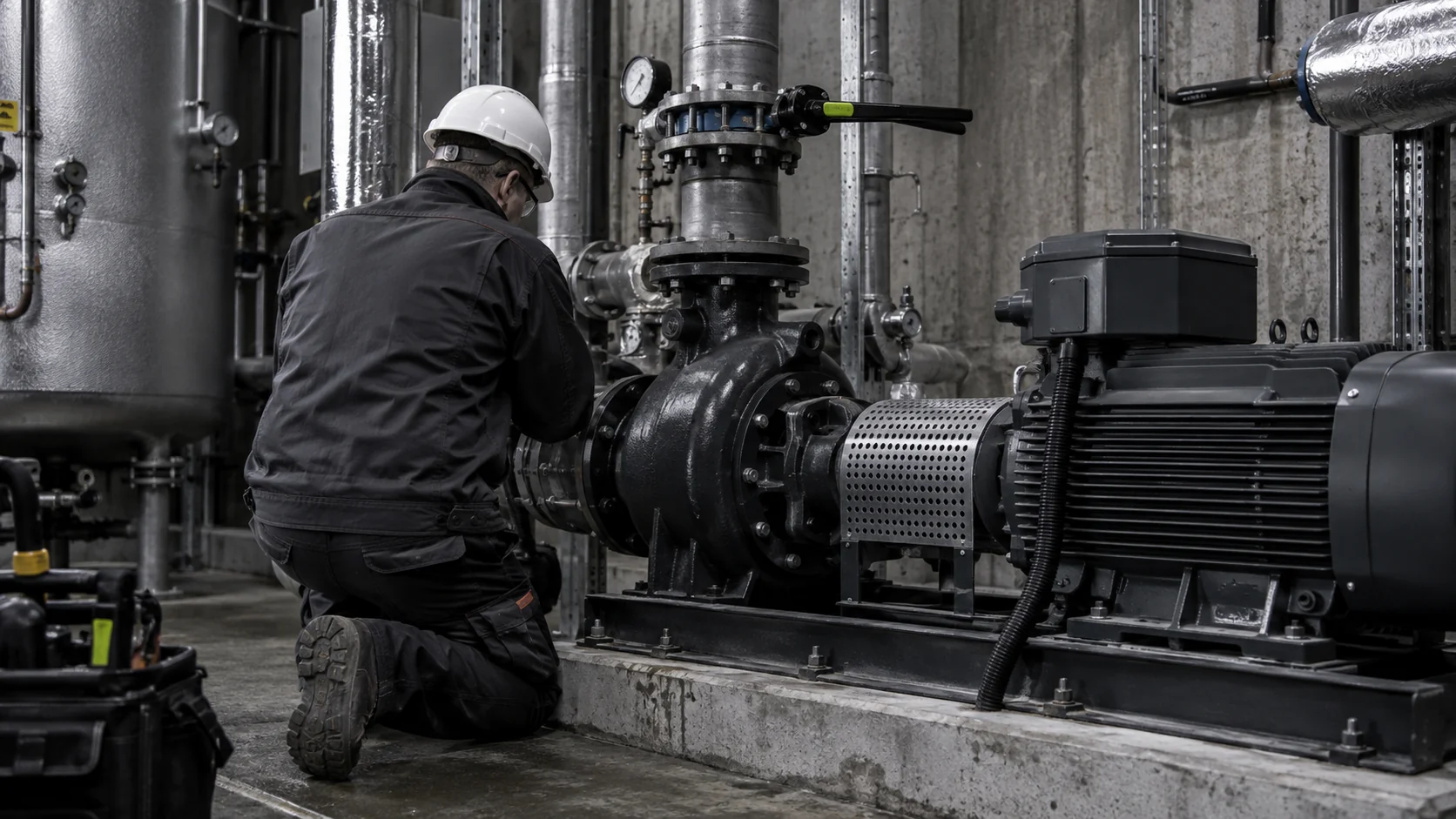
Preserve symptoms without assuming the cause. Record onset, recurrence and associated conditions. Earlier findings and repairs help establish whether the event is new or a continuation of an existing defect.
For reporting the fault, agreeing the visit and recording the result, see our reactive maintenance.
Agree what the first instruction covers
Distinguish a defined repair from diagnosis needed before specification. The initial order should make clear whether attendance covers investigation, corrective work or an immediate protective intervention.
Confirm access, client approval and evidence requirements. Additional discoveries need a route for reporting findings, costs and programme effects before the relevant authorisation is obtained.
Keep the stages connected
Treat attendance as a stage, not proof of resolution. Record observations, work performed and condition left. Link interim controls to permanent remedials, and assign an owner and next step to access or component delays.
Pipe repair may leave drying and reinstatement outstanding. Connect those requirements so the property action is not reported complete merely because water escape stopped.
Use the history to improve maintenance
Use repeated reactive activity to identify wider issues, including operating conditions, persistent defects or assets approaching renewal. Review the pattern before instructing another identical intervention.
Retain the originating symptom, asset or location, findings, remedials and recurrence. Invoice totals and attendance dates cannot alone establish whether work addressed the cause.
Common questions
How does reactive maintenance differ from planned maintenance?
Planned delivery follows an agreed programme; reactive work responds to reported conditions. Both can operate together, with reactive findings informing future scheduled tasks.
Does reactive work always need immediate attendance?
No. Assess safety, ongoing damage and service interruption when setting priority. Reported defects do not all require the same response time.
What should happen if repair cannot finish at the first visit?
Record progress, the barrier to completion and next action. Identify ownership, approval or parts needed, alongside continuing restrictions.
Related guidance and services
Read preparing a maintenance report and coordinating further works. Explore reactive delivery, diagnostic work, service disciplines, project support, sectors and coverage.