
Black & White Facilities / Service brief
Fire, Smoke and Mould Remediation
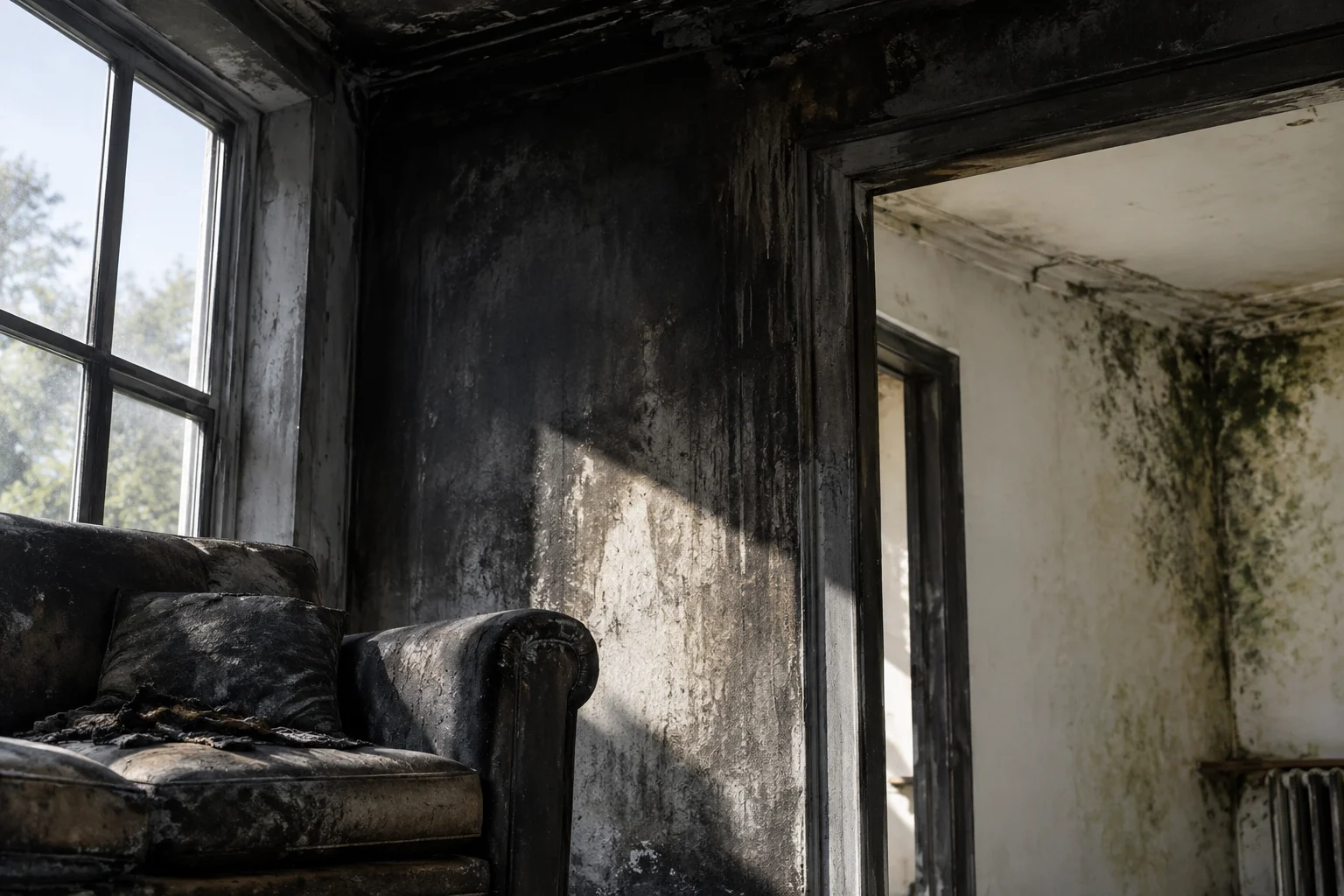
Soot on surfaces, smoke odour in fabric and voids, and mould on walls or ceilings each have a different cause and affect different materials, so they are assessed separately even when they appear in the same building. Cleaning is one step in a wider restoration sequence. Describe the incident or the moisture problem, the rooms affected and what has been done so far.
What the work can include
- Assessment of the affected areas and materials.
- Cleaning of surfaces that can be recovered and removal of those that cannot.
- Sequencing alongside drying, repair and reinstatement work.
Areas in hand, items that stay in place and the information delivered at completion all go into the written scope, with each item tagged by site and location where more than one building is involved.
Our full service catalogue, including every individual service, is available across every listed sector and location. For one site or several, we agree the scope, access and programme around the buildings concerned.

Important decisions
Smoke residue and mould growth call for different approaches and should not be scoped as one job. For mould, deal with the moisture source before final reinstatement; after a fire, assess contamination before cleaning begins. Treat remediation as a specialist task with its own reporting, apart from routine cleaning visits.
Before we visit
Give the incident history, the areas affected, any moisture readings or observations and whatever restoration assessment already exists. Add the relevant site records, the effect on operations and any limit on local approval. Name the site contact and the windows in which work can proceed without stopping critical activity.
How the work proceeds
The enquiry pins down the outcome wanted and the information to hand. Assessment on site then establishes the state of the affected areas and where the limits of the instruction fall. Method, sequence, protection and access are agreed before work begins.
Completion is logged against the site and room reference, with the result recorded and any outstanding work listed separately from the finished instruction. That log informs later maintenance and budget decisions.
What affects cost and timing
Extent of contamination, the amount of porous material involved, access, drying and where reinstatement stops and starts are the principal variables. They set the resource, sequence and time needed; a photograph or an approximate area will not establish the scope.
Where more than one site is affected, compare equivalent tasks and access assumptions before drawing them into one programme, and agree the interim arrangements and the point at which further work requires a decision.
Applications across sectors
In an office the affected rooms are often next to desks and meeting space still in use; in a school or college the work runs under controlled access; in hospitality it keeps clear of food areas and service periods. The complete range is under sectors.
Local coverage
Black & White Facilities serves North East England: Northumberland, Tyne and Wear, County Durham and the Tees Valley, with Newcastle, Gateshead, Durham and Middlesbrough among the listed areas. Whichever applies, send the postcode and the access position; the location directory has the complete list.
Frequently asked questions
Does cleaning the mould stop it coming back?
Only if the moisture problem is also fixed. Cleaning and removal deal with material already affected; the leak, condensation or ventilation issue behind it needs its own corrective scope.
What information helps scope fire, smoke and mould work?
The incident history, the areas affected, moisture information and any restoration assessment already carried out, plus the result required and any fixed dates. Where an assessment has already been done, send it, so the scope does not assume otherwise.
What most affects price and timescale for remediation?
Contamination extent, porous materials, access, drying and the reinstatement boundaries. Comparison only works when each proposal states the same preparation, access and completion activities, so the scope should name them.
How should completed remediation be recorded?
Against the site and work reference, listing areas treated or components replaced and any remaining action. Record limitations separately so the estate record stays dependable.
Guides and useful reading
The decisions that underpin the service are covered in the cleaning and hygiene planning guidance. Where a fire- or mould-damaged element might be renewed rather than cleaned, repair versus replacement explains how to compare condition, cost and disruption.
The HSE's cleaning guidance is the reference for the broader working context.
Related services and your enquiry
Cleaning and Hygiene lists the full group. Work that often follows remediation includes flood and sewage cleaning, graffiti removal and gutter cleaning. The broader estate picture is under all services, maintenance, projects, sectors and locations.
Reach Black & White Facilities with the site reference, the operational priority, the authorised contact and any relevant records, including the incident history, areas affected, moisture information and any restoration assessment where available, so the next step is scoped around the actual building.
Discuss the scope
Tell us what needs attention.
Share the site, the issue and any access requirements so we can discuss the next step.